The 7 best things to eat in Utrecht, ranked
 Fried snacks and a herring roll on a paper tray at a Utrecht market stall
Seven dishes worth building a day around in Utrecht, ranked from a €4 croquette roll eaten standing up to a €35 Indonesian spread, with the streets and market stalls to find each one.
How eating in Utrecht actually works
Utrecht eats early and informally. Kitchens in the wharf-cellar restaurants along the Oudegracht start dinner service around five and are winding down by nine thirty, lunch is a modest affair of bread and something on it rather than a hot meal, and the borrel, the drink with fried snacks around six, does more social work than dinner does. Prices sit below Amsterdam without being cheap: a lunch dish €10-16, a dinner main €22-30, a beer €4-6, coffee €3-4. Cards are the default and some places no longer take cash at all.
The city's food identity has three strands: Dutch bar and market food, the student-driven cheap eating around the Neude and the Voorstraat, and the Turkish, Moroccan and Surinamese cooking of Lombok and the Amsterdamsestraatweg, which is where the best value in the city lives. The ranking below is by how strongly a dish belongs to this city and how good the best version is, not by refinement. Nothing here needs a reservation except the last entry.
1. Broodje kroket and bitterballen in a brown café
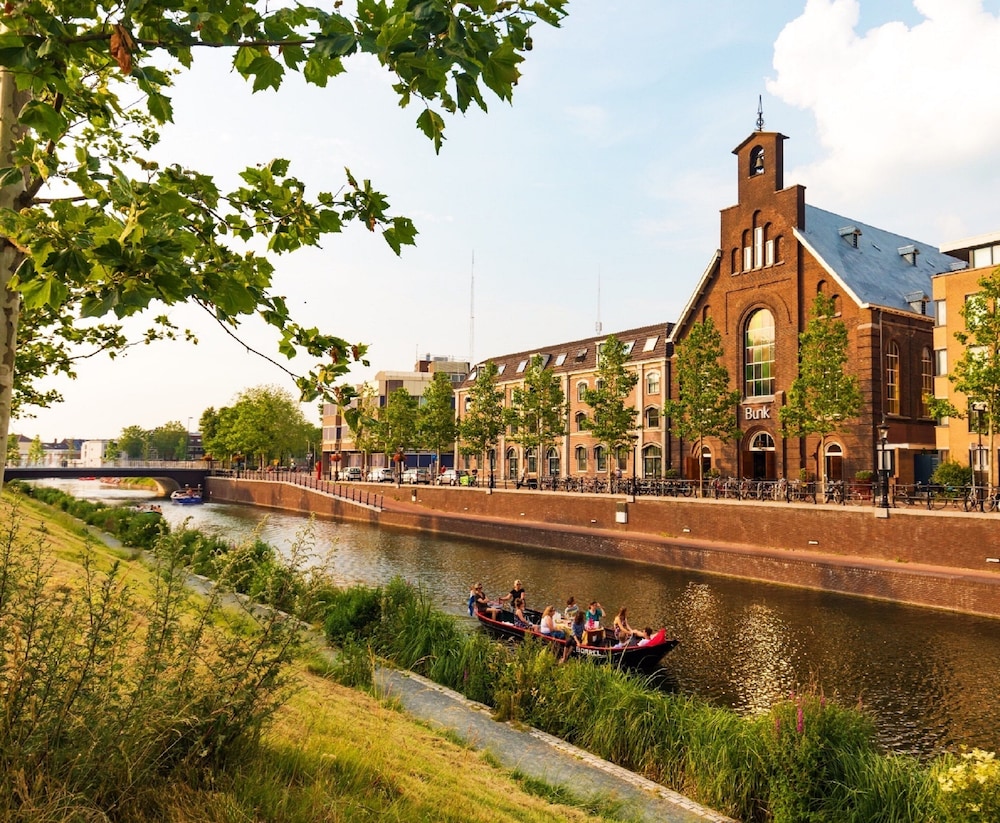
A croquette is a cylinder of thick veal or beef ragout, crumbed and deep fried, served either on a soft white roll with mustard or, in ball form, as bitterballen with a bowl of mustard at drinks time. Done properly the outside shatters and the inside is nearly liquid. The place to eat it is a brown café: dark wood, sand on the floor in the old ones, and a terrace either on the Neude, at the Ledig Erf where the canals meet, or down on the wharves below the Oudegracht.
A roll runs €4-6, a plate of eight bitterballen €8-11, a small beer €3.50-5. It suits everybody, at nearly any hour, and it is the single most Dutch thing you can do in Utrecht for under €10. The catch is the industrial version: pale, uniform croquettes from a freezer bag taste of salt and nothing else. Ask which butcher or maker they use, or watch for houses that advertise a named regional producer; a café that cannot answer is serving the frozen ones.
2. Herring and kibbeling from the market fish stall
Utrecht is inland, but Dutch fish stalls are a national institution and the ones on the Vredenburg market are properly good. Order a haring, cleaned and served with raw onion and pickle, either on a roll or held by the tail if you want to look like you know what you are doing. Or take kibbeling, chunks of battered white fish fried to order, in a paper tray with garlic or tartare sauce, which is the version that converts sceptics.
A herring is €4-5, a tray of kibbeling €7-9, a fried fish roll around €6. It suits mid-morning market shoppers and anyone assembling lunch before a bike ride out along the Kromme Rijn. The catch is timing: herring is at its best in the new season and the queue at the stall peaks around eleven on a Saturday. Skip stalls with fish sitting under a heat lamp and go to the one where the fryer is working continuously, which is always the busiest.
3. Lombok: lahmacun, pide and a Surinamese roti
West of the station, the Kanaalstraat and the surrounding Lombok streets form the best-value eating district in Utrecht and the most interesting. Turkish bakeries turn out lahmacun and pide straight from the oven, Moroccan shops sell msemen and mint tea, and Surinamese kitchens do roti chicken with potato and long beans, or a broodje pom on Sundays. It is a ten-minute walk from Utrecht Centraal and feels a world away from the canal terraces.
This is where €10-14 buys a genuinely large meal, and a lahmacun alone costs €3-5. It suits budget travellers, families and late eaters, since several places run past the hour when the centre has stopped serving. The catch is presentation: many of these are counter operations with plastic chairs and no atmosphere to speak of, and English varies. Point, pay, take it to the Wilhelminapark or the canal and eat outside. Any visitor spending more than two days in Utrecht should eat here at least once.
4. Cheese from the province, bought by the wedge
The countryside west of Utrecht around Woerden and the polder villages is dairy country, and the Saturday market cheese traders sell farm-made Gouda cut from whole wheels rather than the plastic-wrapped supermarket version. Ask for jong belegen for something mild and sliceable, belegen for the middle ground, or oud for the crystalline, salty, almost caramel-flavoured version that keeps for weeks. A good trader will hand you three slivers to taste before you decide.
Prices run €12-18 a kilo depending on age, and a workable wedge is €6-10. It suits picnickers, self-caterers and anyone who wants a souvenir that is not a fridge magnet; vacuum-packed, it travels home fine. The catch is buying too young out of caution. The mild ones are pleasant and forgettable; the two-year-old cheeses are what makes the trip. Buy a small piece of something old rather than a large piece of something safe, and skip the flavoured cheeses with pesto or truffle entirely.
5. A stroopwafel made in front of you
A thin waffle split horizontally and filled with warm caramel syrup, pressed between hot irons at a market stall and handed over floppy and sticky. This is a different food from the packaged discs sold in tins at the airport, which are dry and hard by comparison, and the difference is genuinely worth ranking. The market stalls on Vredenburg and the town squares on day trips like Amersfoort do the fresh version.
One costs €2.50-3.50, a pack to take home €6-10. It suits mid-afternoon walking breaks and children, and it pairs properly with the strong filter coffee Dutch cafés serve. The catch is the packaged version being sold at inflated prices in tourist shops around the Domplein; the exact same tins sit in every supermarket for a third of the money. If you want the traditional trick, balance a packaged one on the rim of a hot mug for two minutes to soften the syrup before eating.
6. Apple pie, and the Utrecht biscuit tin
Dutch appeltaart is a tall, dense, pastry-cased pie of cinnamon-spiced apple, sometimes with raisins, served warm with a mountain of unsweetened whipped cream. Cafés in the centre and the estate teahouses out at Rhijnauwen and along the Vecht all make a version, and a good slice with coffee is a legitimate meal replacement. Alongside it, look for the buttery local biscuit known as Utrechtse sprits at old-school bakeries, and the small chocolate models of the Dom tower sold as souvenirs.
A slice with cream is €5.50-8 and coffee €3-4. It suits rainy afternoons and the end of a bike ride. The catch is that pie quality varies enormously and the worst versions are bought-in, wet and over-sweet; look for houses that display a single large pie under a dome rather than a chiller full of identical wedges. Skip the chocolate Dom towers as a food item, though as an under-€10 present they do the job better than most souvenirs.
7. An Indonesian rijsttafel, and what to skip
Indonesian food is not a novelty in the Netherlands but a consequence of colonial history, and the rijsttafel, a spread of a dozen or more small dishes served together with rice, is the country's great shared meal. Utrecht has several long-running Indonesian kitchens, and a table of four ordering one is the most enjoyable dinner in the city for the money. Expect satay, beef rendang, spiced vegetables, sambals of varying ferocity and a sweet coconut dessert.
Reckon €28-40 a head for the full spread, less for a single rice dish, and reserve, since these places have limited covers and fill on Fridays and Saturdays. What to skip: the pancake restaurants aimed squarely at day-trippers around the Domplein, where €14 buys a mediocre pancake; the chain sandwich bars near the station when Lombok is ten minutes away; and any wharf-cellar terrace on the Oudegracht advertising photographs of its dishes. The cellars are worth a drink for the setting, but eat where locals queue.
Before you book
The questions people ask about Utrecht, answered with this month’s numbers.
Around €35-45 a day covers a bakery breakfast, a market lunch of herring or lahmacun, a coffee and pie stop, and a modest dinner with one beer. Adding a rijsttafel or a wharf-cellar dinner with wine pushes a day to €70-90 per person.
Yes. Utrecht has a strong vegetarian scene driven by its student population, most cafés list a vegetarian main, and vegan bitterballen made with mushroom ragout appear on a lot of menus. Turkish and Moroccan places in Lombok offer plenty of vegetable dishes, though check whether stocks are meat-based.
Many Utrecht kitchens take their last orders between nine and nine thirty, earlier on Sundays and Mondays, and some restaurants close entirely on Mondays. If you land in the evening, aim for a snack bar, a Lombok counter kitchen or a brown café serving bitterballen, which run later than restaurant kitchens.
Service is included by law and staff are paid a normal wage, so tipping is optional. Rounding up the bill or leaving roughly five per cent for a good sit-down meal is normal and appreciated. Nobody tips on a €4 herring or a counter takeaway, and card terminals often offer a rounding option.