Why your card gets declined in Utrecht (and how Dutch payments actually work)
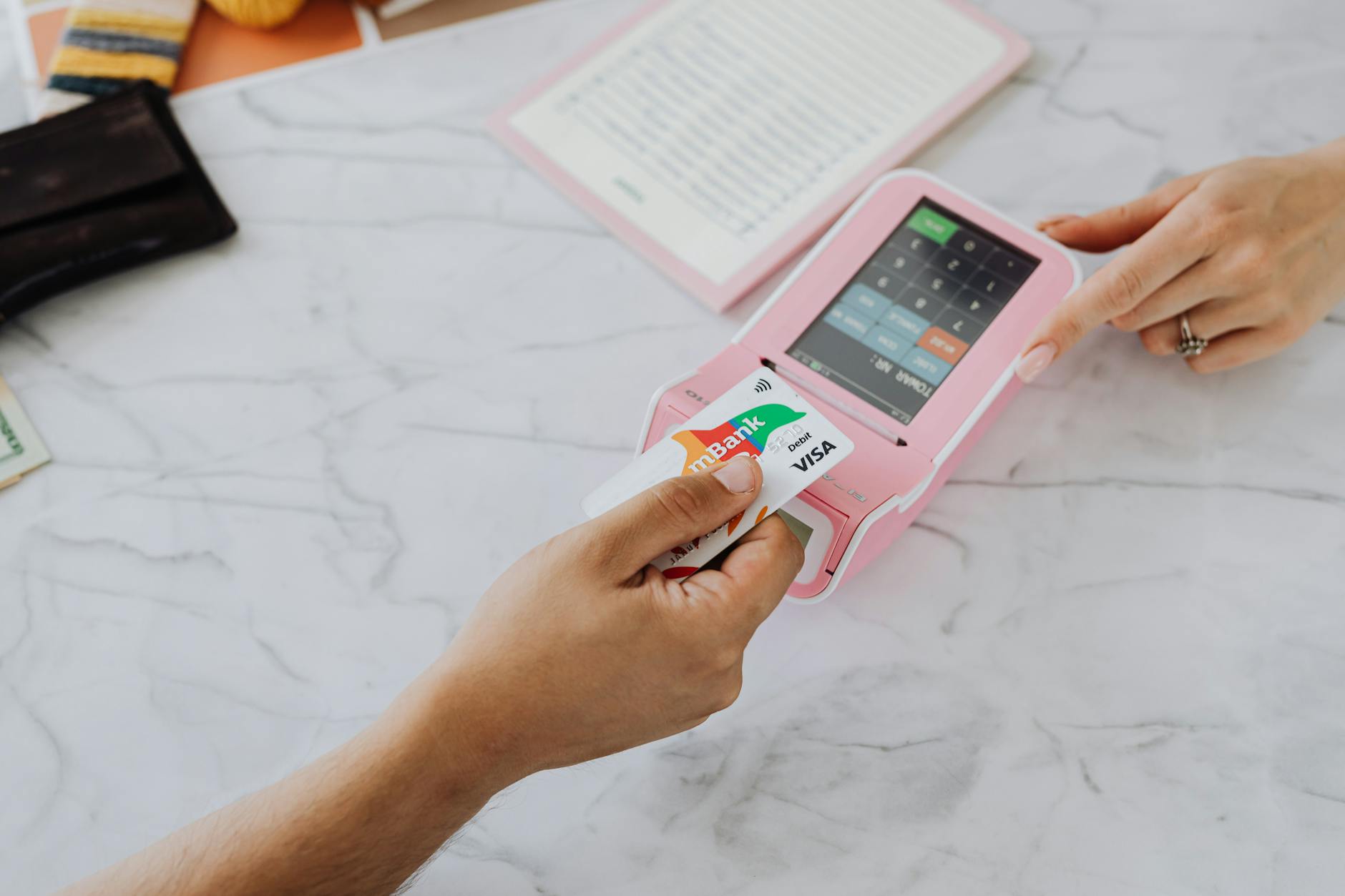 A hand holding a bank card at a Dutch payment terminal with a pin-only sign in a Utrecht shop
The Netherlands is one of the most card-first countries in Europe, yet 3 specific card types get refused in Utrecht daily and the fix costs nothing if you know it in advance.
The short answer: it is usually the card type, not the card
Nine times out of ten a refusal in Utrecht is not a bank block, it is a terminal that accepts one card family and not yours. Dutch retail grew up on domestic debit, and the local verb for paying is pinnen, from entering a PIN at a card terminal. Many small businesses, market stalls and neighbourhood cafés are set up for debit and nothing else, because credit card acceptance costs them more per transaction. Present a credit card there and it declines cleanly, with no explanation beyond a shrug and the word pin.
The fix is to carry a Visa or Mastercard debit card as your primary and a credit card as backup, rather than the reverse. Add a phone wallet loaded with the debit card, because contactless-only terminals are common and a phone tap often works where a physical card fumbles. If you have only credit cards, plan to use larger shops, restaurants, hotels and museums, all of which take them routinely, and keep €40 to €60 in cash for the places that will not. That combination has never left me stuck here.
American Express and the cards that struggle
American Express acceptance in the Netherlands is far patchier than in the UK or US: fine at hotels, department stores, some restaurants and airline-adjacent businesses, unreliable at bakeries, cafés, market stalls, museum shops and independent boutiques. Diners is worse. Do not plan a trip around Amex as a sole card. Also fragile: certain prepaid travel cards and virtual cards whose authorisation behaviour confuses Dutch terminals, and older cards without contactless, since some venues have quietly stopped taking chip-and-PIN inserts on their newest terminals.
There is a second, less obvious failure mode: transit and unattended machines. Ticket machines, parking meters, charge points and public toilets run pre-authorisation checks that some banks refuse for foreign merchants, and the machine simply says no. Before you travel, enable travel notices in your banking app, check that contactless is switched on, and confirm your daily contactless limit. Carry a second card from a different issuer if you can, because when card A gets stuck in a garage payment machine at 22:00 in Kanaleneiland, card B is what gets you home.
Where cash still matters, and where it is banned
Cash is a minority sport here, and in a growing number of places it is refused outright: many supermarkets, cafés and museum desks display alleen pinnen, meaning card only, and the staff genuinely cannot take your notes. That said, keep a modest amount of cash for four situations. Small independent stallholders at the Vredenburg market and the Saturday fabric market on Breedstraat; the flower stalls on Janskerkhof; church donation boxes and tip jars; and old-fashioned neighbourhood bars in Lombok or Zuilen that still prefer coins.
Coins specifically. Public toilets in and around the station cost roughly €0.50 to €1, some supermarket trolleys need a deposit coin, station lockers and a few campsite showers take coins, and small change is what you drop in a busker's case on Oudegracht. One and two cent coins are not used in Dutch retail: cash totals round to the nearest five cents, upward or downward, which is entirely legal and not a scam. Carry a couple of €10 notes and a handful of €0.50, €1 and €2 coins and you are covered for the whole trip.
ATMs, fees and the exchange-rate trap
Cash machines in the Netherlands have largely been consolidated into a single yellow-branded network, which means fewer machines than you may expect and almost none inside bank branches. In Utrecht you will find them around Utrecht Centraal and Hoog Catharijne, on Vredenburg, near Neude, and in the shopping streets of Overvecht, Kanaleneiland and Leidsche Rijn. They are card-network agnostic and generally do not charge their own fee for foreign cards, but your own bank may, so check its terms and withdraw once for €100 rather than five times for €20.
The bigger cost is dynamic currency conversion. When a machine or a shop terminal offers to charge you in your home currency, decline it and choose to be billed in €, the local currency, every time. Accepting the conversion hands the exchange rate to the merchant's processor and typically costs several percent. The same applies at hotel checkouts and car hire desks. If a receipt shows a home-currency total you did not ask for, you were converted; say so at the desk while you are still standing there, because it is much harder to unwind later.
Contactless limits, PINs and the little screen
Contactless works nearly everywhere, with a PIN request kicking in above roughly €50 per transaction or after several taps in a row, depending on your bank's rules. Know your PIN; a card whose PIN you have never memorised is a card that fails at a supermarket self-checkout in Utrecht at 20:00. Phone wallets sidestep the limit because the phone has already authenticated you, which is a real advantage for restaurant bills and hotel extras. American cards used to signing rather than entering a PIN sometimes prompt awkward pauses; the terminal is waiting, so enter the PIN.
Read the terminal. Dutch screens often show Nederlands first with an English option on a soft key, and the sequence usually runs total, then a tip prompt at some restaurants, then PIN or tap. Do not tap twice; a double tap can log two authorisations that both clear. If a payment fails, wait for the receipt slip to print or the screen to clear before retrying, or you risk two pending charges. Staff are used to visitors and will patiently re-run the whole thing, so ask rather than jabbing at buttons.
Splitting bills, Tikkie and the tip line
The Dutch split bills as a matter of course, and restaurants here will happily run four cards for one table, which is not considered rude or difficult. What you cannot join is Tikkie, the ubiquitous domestic payment-request app that locals use to settle between friends; it needs a Dutch bank account. If you are travelling with Dutch friends, expect to be the one handing over cash or offering to pay the whole bill and be reimbursed in cash. Say samen or apart, together or separate, when the terminal comes out.
On tipping: service is included in Dutch prices and there is no obligation, but rounding up is common and a tip of roughly 5 to 10 percent is a genuine compliment at a sit-down restaurant. Some terminals show a tip prompt in euros rather than percentages, and many do not prompt at all, in which case leaving coins on the table or telling the server a rounded total works. Nobody tips at a bakery counter or a takeaway window, and nobody tips a taxi more than the rounded-up fare. Do not agonise over it.
What a day actually costs, in numbers
So you can sanity-check your spending: a filter coffee runs roughly €3 to €3.60, a cappuccino a little more; a beer on a terrace on Neude or the Oudegracht wharf is roughly €4 to €5.50; a filled roll or broodje for lunch €6 to €9; a plate of Indonesian, Turkish or Surinamese food in Lombok €12 to €18; and a main course at a mid-range restaurant in Binnenstad €19 to €26. Museum admission for the big city museums sits around €15 to €18, and a short tram or bus hop costs roughly €2 to €3.50.
Two spending notes specific to Utrecht. The national Museumkaart looks tempting but is aimed at residents and needs a Dutch address to activate fully, so check the terms before buying rather than assuming it works for a four-day visit. And terrace prices on the Oudegracht wharf carry a premium of roughly €0.50 to €1 a drink over identical bars two streets inland on Voorstraat or in Wittevrouwen; the view is worth it once, not five times. Prices drift upward each year, so treat all of these as bands from mid-2026.
Before you book
The questions people ask about Utrecht, answered with this month’s numbers.
Not much, but carry €40 to €60. Card-only venues are common and some places refuse notes entirely, yet market stalls, small bars, donation boxes and paid toilets still want coins. Keep a few €0.50, €1 and €2 pieces for toilets, lockers and trolleys.
At hotels, department stores and many restaurants, yes. At bakeries, cafés, market stalls, museum shops and small independents, frequently not. Bring a Visa or Mastercard debit card as your main payment method and treat Amex as a backup rather than the other way round.
No. Always choose €, the local currency, at shops, hotels, cash machines and hire desks. Dynamic currency conversion hands the exchange rate to the merchant's processor and typically costs several percent more than your own bank would charge.
It is appreciated, not expected, because service is included in the listed price. Rounding up is normal, and 5 to 10 percent at a sit-down dinner is generous. No tip at bakery counters, takeaway windows or bars where you order and pay at the counter.