Cycling in Utrecht season by season: wind, rain, frost and when to skip the bike
 Cyclist in a rain cape crossing a bridge in Utrecht on a wet grey day
Utrecht averages rain on around 130 days a year and its worst enemy is wind, not cold — here is what each season does to a bike ride, and the four conditions when I leave the bike locked.
What the climate here actually does
The national weather institute sits in De Bilt, a few kilometres east of the Utrecht centre, so the country's benchmark climate figures are effectively Utrecht's own. Expect January and February highs around 6-7°C, April around 14°C, July and August around 22-23°C, October around 14°C and December back at 6°C. Annual rainfall is roughly 800-850 millimetres spread across the year rather than concentrated in a monsoon; there is measurable rain on something like 130 days, but most of it falls in short bursts rather than all-day downpours.
That distribution is the key to cycling here. A Dutch commuter does not plan around avoiding rain; they plan around a 20-minute shower arriving at some point and being over by the time they have finished a coffee. Snow is genuinely rare and rarely lies. What does stop people is wind, which peaks from November to February with sustained southwesterlies over open polder, and ice on brick surfaces in a hard frost. Both are seasonal and both are forecastable a day ahead.
Spring: showers, hail and the best riding of the year
March and April are volatile — sunshine, a hail squall and a rainbow inside an hour is a normal Dutch April — with highs climbing from 10°C to 14°C and easterly cold snaps that can drop the wind chill several degrees below the reading. But the light is long, the tree tunnels along the Nieuwegracht and Maliebaan are in blossom, and the polder west of the city is bright green. Rates are low in early spring too, at €95-130 for a central double, before the May school holiday takes them to €200-plus.
May is the best cycling month here, full stop: highs of 17-19°C, light until well past 21:00, and the Kromme Rijn route east to Bunnik and on towards Wijk bij Duurstede — about 25 kilometres of quiet riverside lane — at its prettiest. Ride it eastward in the morning and let the prevailing southwesterly push you home. Do not underestimate the sun: there is no shade on the polder and Dutch cyclists burn on the first warm weekend of the year with impressive reliability.
Summer: thunderstorms and the 22:00 evening ride
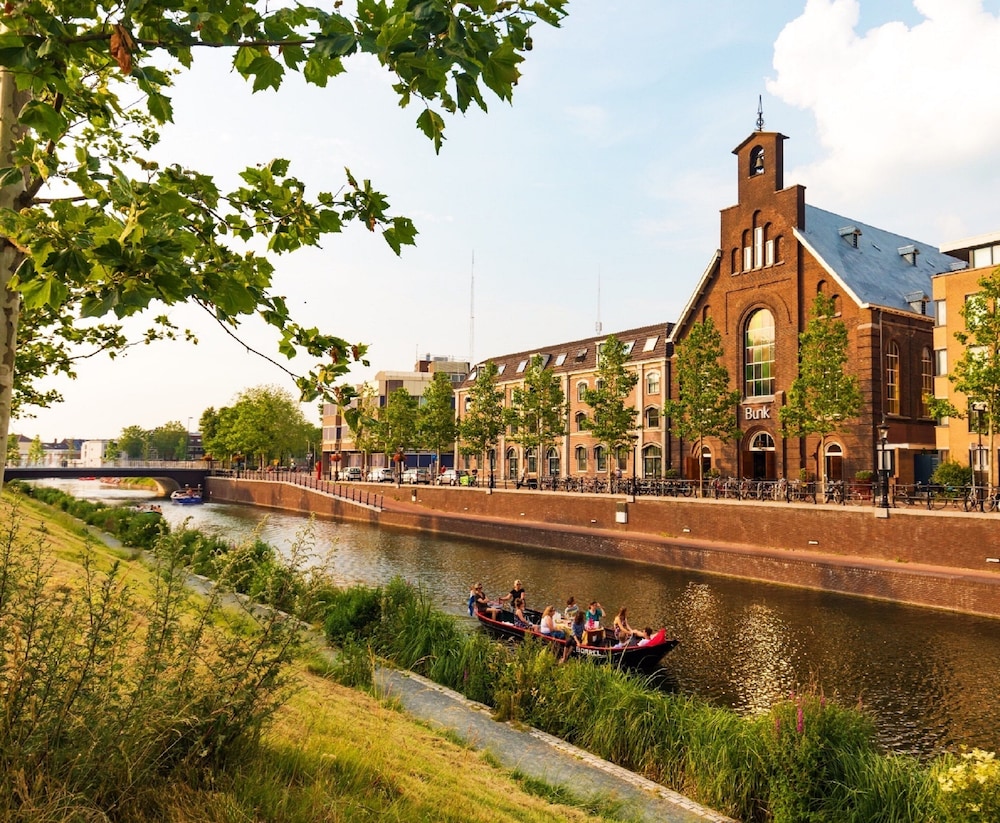
July and August average 22-23°C with occasional pushes past 30°C during heatwaves, which have become a real feature of Dutch summers. Humid afternoons build into thunderstorms that arrive fast and hard, so the sensible pattern is ride in the morning, take the long lunch, and go out again after 18:00 — sunset near midsummer is around 22:05, and the evening light on the wharves along the Oudegracht is the reason to be here. Water is easy to refill; carry more than you think on a hot polder ride.
For shade, ride east rather than west: the Amelisweerd and Rhijnauwen estates at Bunnik give you a wooded riverside on the hottest afternoons, and the Kromme Rijn has swimming spots the locals use. Bike hire runs €10-15 a day from shops around the station and the centre, and there is a large station-based public rental scheme that generally requires a Dutch travel card or subscription — check the operator's terms before relying on it. Summer is also the cheapest hotel season, at €75-110 in the ring-road business hotels.
Autumn: wind is the story, and the light goes early
From late September the southwesterly wind becomes the defining condition. A 40 kilometre-an-hour headwind across open polder turns a 20-minute ride into 35 and is far more tiring than cold. Plan routes so the return leg is downwind, and use the sheltered options — the Kromme Rijn corridor, the wooded Heuvelrug lanes, the canal towpaths — on windy days. Wet leaves on brick paving and on the wooden bridges are genuinely slippery in October and November; take corners slowly and brake earlier than instinct suggests.
Clocks go back on the last Sunday of October, 25 October in 2026, and after that it is dark by around 17:15. Working front and rear lights are a legal requirement on Dutch bikes at night and police do enforce it, especially around the station. Rental bikes come with them but test them before you leave the shop. Autumn rates in the city are moderate — €120-160, spiking on the film festival and November music festival weekends — and the museums are pleasantly empty.
Winter: frost, black ice and what the gritters do
December to February brings highs of 6-7°C, frequent frosts, occasional runs of days below zero and, once or twice a winter, a light snowfall that turns to slush by afternoon. The real hazard is black ice on the brick and asphalt cycle paths at dawn. Dutch municipalities grit primary cycle routes on their own gritting rounds during freezing weather, which is why cycling continues through a cold snap here — but side streets, wharf steps and bridge decks stay treacherous, and the wharf cellar stairs along the Oudegracht are lethal when frozen.
Ride with tyres slightly softer than usual, sit upright, and avoid painted road markings and tram rails on the Nieuwegein and IJsselstein tram corridor, which glaze first. If a hard freeze holds for a week or more, the shallow canals and polder ditches can carry skaters and the whole country talks about nothing else; it is unpredictable, so treat it as a bonus rather than a plan. Winter is also the cheapest room season, at €85-120 in the centre from mid-January.
The four conditions when I leave the bike locked
One: an official wind warning at the higher alert levels, when gusts make handling genuinely dangerous and branches come down in the estate woods. Two: freezing rain, which glazes every surface within minutes and is the one condition where Dutch cyclists themselves walk. Three: dense fog on the polder, where farm lanes have no lighting and sightlines vanish. Four: any evening where you plan to drink more than a beer — Dutch drink-driving limits apply to cyclists, enforcement around the Neude and Oudegracht is real, and fines are not trivial.
The alternatives are good. The Binnenstad is about 20 minutes' walk end to end, so most sightseeing needs no vehicle at all. Two tram lines and a dense bus network run from Utrecht Centraal, with the science park line taking about 15 minutes to De Uithof. Trains reach Amersfoort, Woerden, Houten and Driebergen-Zeist in 12-20 minutes. On a wet January Saturday, the honest answer is that a museum, a wharf-cellar café and a tram beats a heroic ride every time.
Gear, rentals and the local etiquette that keeps you safe
Buy or borrow the rain cape rather than a cycling jacket: the Dutch poncho keeps your legs and hands dry on an upright bike and packs into a saddlebag. Add mudguards, which almost every Dutch bike already has, and gloves from November to March. Helmets are unusual among Dutch adults and not required, though nobody will mind if you wear one. Panniers or a front basket beat a rucksack, especially in wind, and a decent lock matters — bike theft in a student city is not a myth.
Etiquette: keep right, signal with your arm, do not stop on a cycle path to look at a map, and ride single file where a path narrows. Locals ride faster than tourists expect and electric bikes arrive silently. Park only in racks or the huge underground station bicycle garage; bikes left against railings in the centre get removed. If your hotel offers bike storage, use it — an overnight bike left on a Binnenstad street is a straightforward loss, whatever the season.
Before you book
The questions people ask about Utrecht, answered with this month’s numbers.
May. Highs of 17-19°C, daylight past 21:00, blossom on the canal streets and the Kromme Rijn route at its best. September is the close runner-up with warmer water and quieter paths, though the southwesterly wind starts to build in the second half of the month.
Constantly. Highs of 6-7°C and rare snow make winter riding routine, and municipalities grit primary cycle routes during freezing spells. The exceptions are freezing rain and high-wind warnings, when even locals walk or take the tram. Side streets and wharf steps stay icy long after main routes are cleared.
Yes. Working front and rear lights are legally required after dark in the Netherlands and enforcement around Utrecht Centraal is real. Rental bikes are supplied with them, but test both before leaving the shop, particularly from late October when darkness falls around 17:15 after the clocks go back.
Shops around the station and centre charge roughly €10-15 a day, usually with a deposit and a lock included. A large station-based public rental scheme also exists but generally needs a Dutch travel card or subscription, so check the operator's current terms before assuming you can walk up and hire one.