Where to stay in Zeist
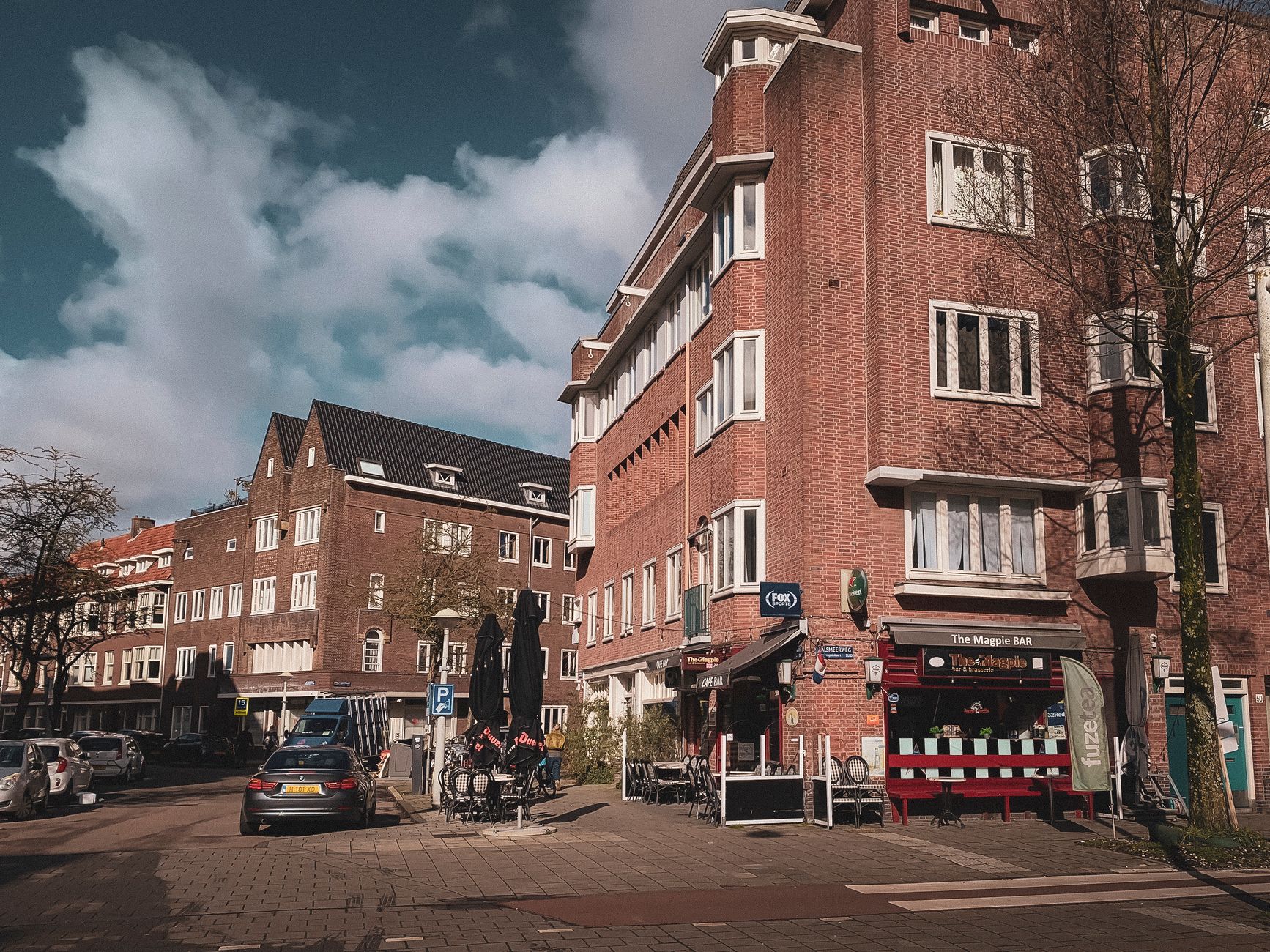
 Brick eighteenth-century terraces around a quiet square in Zeist, with mature trees behind
Ten kilometres east of Utrecht Centraal, Zeist swaps canal frontage for a baroque palace and the wooded edge of the Utrechtse Heuvelrug, with doubles at roughly €95-150 against €150-210 in the Binnenstad.
Who Zeist actually suits
Zeist works for people who arrive on wheels and intend to use them. If your trip is built around walking or riding the Heuvelrug ridge, the estates of Beerschoten and Houdringe, the Pyramide van Austerlitz and the sand paths around Bosch en Duin, you are sleeping at the trailhead rather than half an hour from it. It also suits anyone in town for a course or conference: the KNVB campus on the Woudenbergseweg and the office belts along Utrechtseweg and Amersfoortseweg fill the town's rooms midweek. Families get gardens, verges and off-street parking instead of a 22-square-metre canal-house room up three flights of stairs.
It does not suit a first-time visitor whose list is the Dom tower, the Museumkwartier, Oudegracht wharf terraces and a late night in Lombok. There is no railway station in Zeist itself, evening bus frequency thins out well before the city's last trams, and the cultural programme is a theatre and a handful of galleries rather than a season of festivals. If you plan three consecutive museum days in Utrecht, the 25 to 30 minutes each way plus the last-bus anxiety will cost you more than the €50 a night you saved. Book the city and visit Zeist on a bike.
What a night costs, and when the prices flip
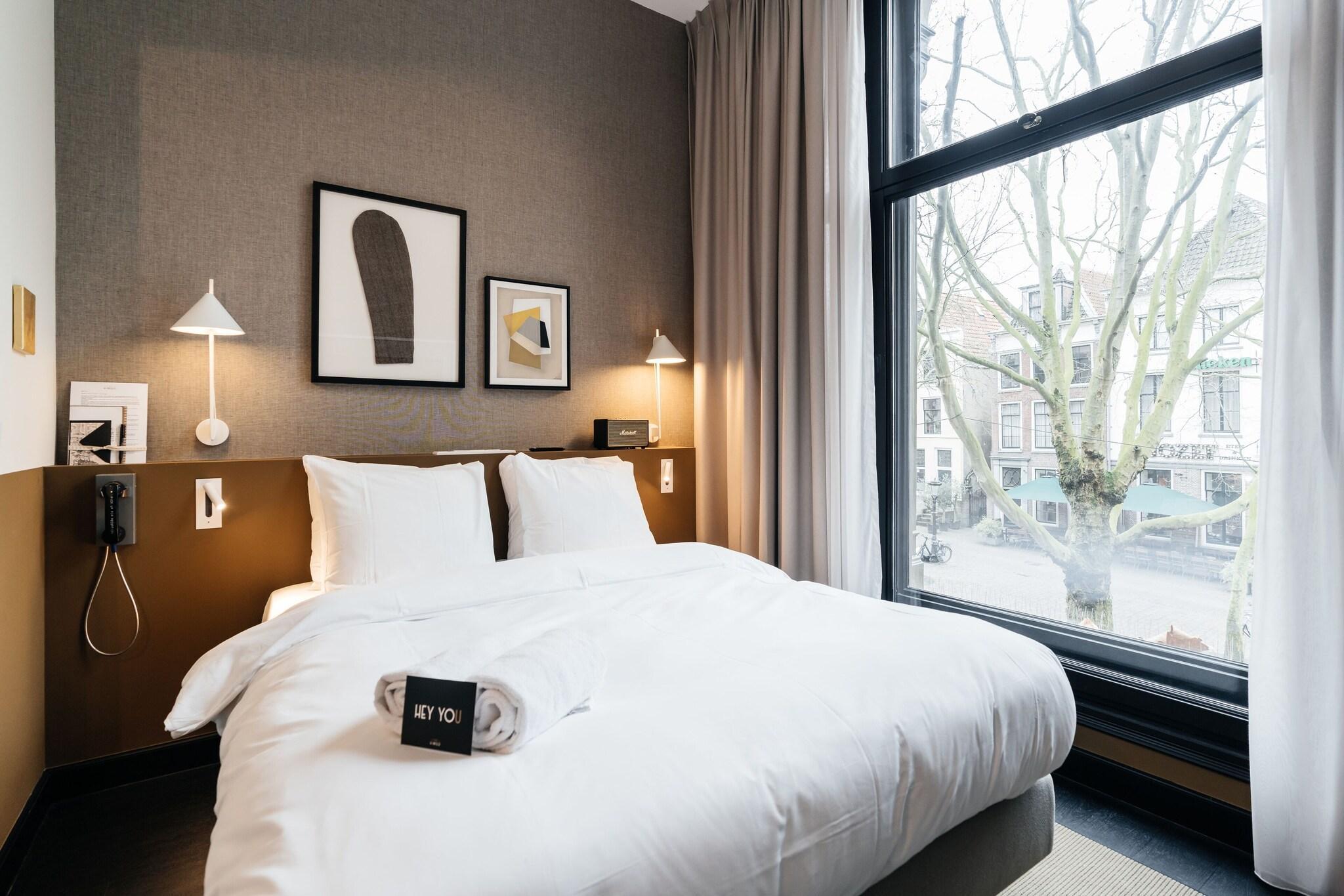
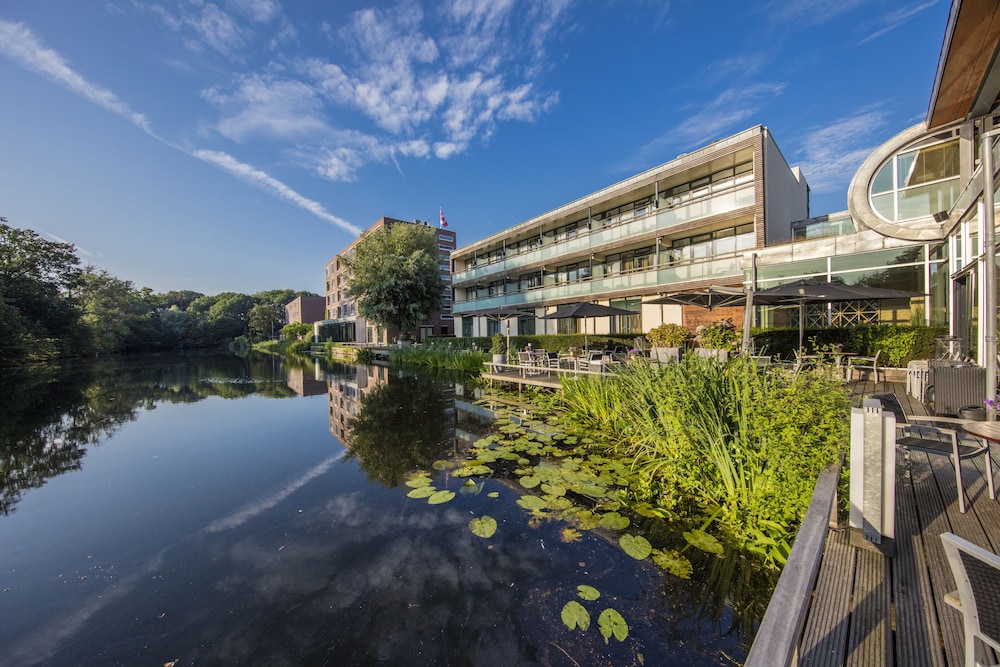
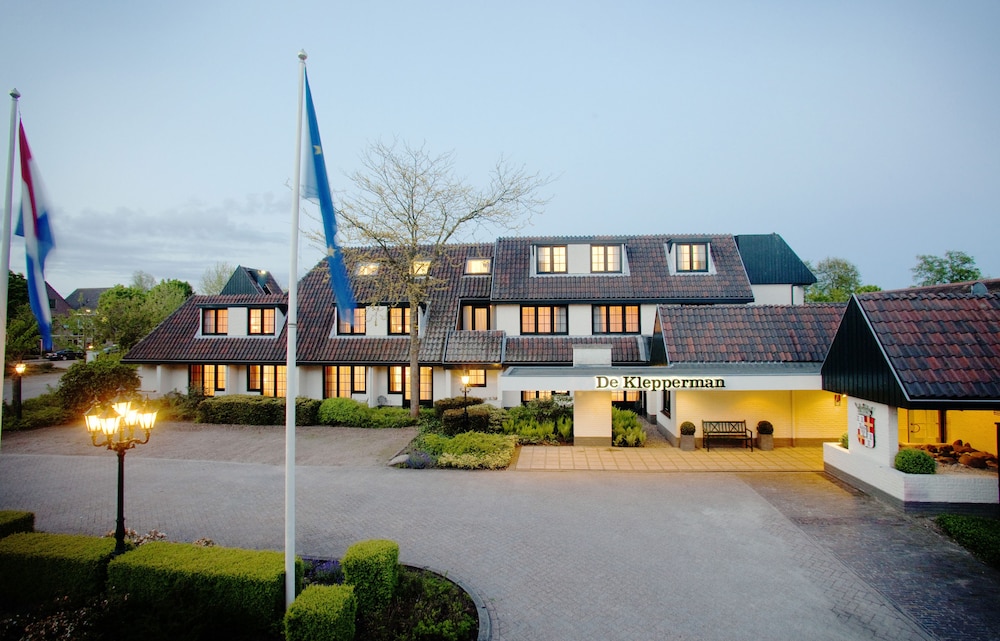
Expect €80-110 for a double in a village bed and breakfast, €100-140 for a straightforward town hotel room near the centre, and €130-190 midweek for the big theatre-and-spa hotel complex on Het Rond, the one genuinely famous address in town. Villa and estate rooms out towards Bosch en Duin and Huis ter Heide run €140-200 and behave like small country houses. Against central Utrecht at €150-210 midweek and €170-250 at weekends, Zeist saves you €40-70 a night, and breakfast is usually folded into the rate here where the city charges €15-22 extra for it.
The rhythm is the reverse of the city's. Utrecht is dearest Friday to Sunday; Zeist is dearest Monday to Thursday, when corporate bookings take the stock. Arrive Friday afternoon and you can find the same room €30-50 cheaper than a Tuesday business rate. The other saving is the car: parking is free or a couple of euros an hour on most Zeist streets, against €25-45 a day in a Utrecht city garage. Do the arithmetic across three nights with a car and Zeist is comfortably the cheaper base, even before you count breakfast.
The centre on foot: Het Rond, Slotlaan, Broederplein
The walkable core is compact and unusually handsome for a commuter town. Slot Zeist, the baroque palace built between 1677 and 1686 for Willem Adriaan van Nassau-Odijk, sits at the end of Het Rond with gardens you can walk through without a ticket. Flanking it are Broederplein and Zusterplein, the brick terraces of the Moravian Brethren settlement founded here in 1746 and still the quietest five minutes in the municipality. Slotlaan runs roughly 800 metres north from Het Rond as the main shopping street, with Voorheuvel and the Walkartpark bandstand a few minutes west.
In practical terms, a room within 400 metres of Het Rond puts a supermarket, a dozen places to eat, the bus stops for Utrecht and Amersfoort and the palace gardens all inside a ten-minute walk. That is the address to hold out for. Anything further up the Utrechtseweg towards the ring road adds traffic noise without adding much else, and rooms out along the Amersfoortseweg are effectively motel stops. Note that Sunday trading in Zeist is limited compared with Utrecht city; buy your picnic on Saturday if you are heading into the woods on a Sunday morning.
The wooded fringes, and whether you need a car for them
Zeist municipality is bigger than the shopping street suggests. Kerckebosch, rebuilt through the 2010s as low-rise housing dropped into standing pine woods, is a fifteen-minute walk or five-minute ride east of the centre and pleasant if you land a room there. Bosch en Duin, north-west, is one of the wealthiest postcodes in the Netherlands and reads as villas behind hedges: lovely to cycle through, thin on shops. Austerlitz, six kilometres east, is a small village beside the 1804 pyramid built by Napoleonic troops under General Marmont, a 36-metre earthwork with an obelisk and a view over the ridge.
Without a car, restrict yourself to the centre, Kerckebosch or Den Dolder. Den Dolder matters because it is the one part of the municipality with a railway station, on the Utrecht-Bilthoven-Baarn line, roughly four kilometres north of Zeist centre. With a car, the fringes open up: Austerlitz, Huis ter Heide and the estate lanes towards Driebergen all give you woodland out of the door. What I would skip is a room on an unserved lane with no bike, no bus within a kilometre and dinner three kilometres away. That is a taxi habit, not a saving.
Getting into Utrecht, and getting back at night
Regional buses run from the Centrumzijde bus station beside Utrecht Centraal to Het Rond and Slotlaan in roughly 25 to 30 minutes, every ten to fifteen minutes across the working day, continuing east towards Amersfoort. The alternative is the intercity: Driebergen-Zeist station lies about four kilometres south of Zeist centre, rebuilt with a road tunnel and park-and-ride, and reaches Utrecht Centraal in roughly eleven to thirteen minutes. Buses and bikes link the town to that station. Frequencies and last departures change with each timetable, so check the operator's planner rather than trusting a number you read in a guide.
The night is the weak point. Evening buses thin out and the last useful departure from Utrecht is earlier than most visitors expect, which turns a late concert at TivoliVredenburg into a €35-45 taxi. Two workarounds: rent or bring a bike and ride the twelve kilometres back along the Kromme Rijn through Bunnik in 35 to 40 minutes on flat, lit-in-parts paths, or plan your late nights for the one night you sleep in the city. If you intend three late nights out of four, you have chosen the wrong base.
Eating, and how early the kitchens close
Slotlaan and Voorheuvel carry the everyday spread: Italian, Turkish grills, a couple of good bakeries, brown cafes with Utrecht beer on tap, and terraces on Het Rond that catch the afternoon sun in front of the palace. The theatre complex on Het Rond gives the town a genuine evening programme, worth checking before you book a night. For a proper dinner, the estate and country restaurants towards Bosch en Duin and Driebergen are where locals go for anniversaries, at €45-70 a head for three courses without wine.
Time it correctly. In the centre most kitchens take their last orders around 21:00 to 21:30, and in Austerlitz or Huis ter Heide you should assume 20:30 and a closed shop after 20:00. Sunday and Monday are quiet nights and several of the better places simply shut. If you land at 22:00 on a Sunday, your options are a kebab on Slotlaan or the hotel bar, so eat on the train or book a room where dinner is available on site. In the city, that same hour still buys you a full menu.
The verdict, and the alternative if Zeist is wrong
If I had one recommendation it would be this: book within a ten-minute walk of Het Rond, arrive on a Friday, and take the room with breakfast included and a parking space. That combination is where Zeist beats the city on value rather than merely undercutting it, and it leaves you walking to the palace gardens, the Moravian squares, the buses and dinner. Two to three nights is the right dose, ideally with a bike, one day in Utrecht and one day on the ridge towards Austerlitz and the Kaapse Bossen side of the Heuvelrug.
If you are travelling by train only, and museums and canals are the point, Bilthoven gives you the same quiet green with a station nine minutes from Utrecht Centraal, and central Utrecht itself gives you everything at €40-70 more. If you want a village with more of its own life and a shorter hop to the forts and the Kromme Rijn, look at Bunnik or Doorn instead. Zeist earns its place for walkers, drivers, conference guests and anyone who values a garden and a free parking space over a wharf terrace.
Before you book
The questions people ask about Zeist, answered with this month’s numbers.
Not in the town itself. Driebergen-Zeist station sits about four kilometres south, roughly eleven to thirteen minutes from Utrecht Centraal by intercity, and Den Dolder in the north of the municipality is on the Utrecht-Baarn line. Otherwise you use the frequent regional buses from Utrecht Centraal, which take 25 to 30 minutes.
Usually by €40-70 a night. Zeist doubles run about €95-150 with breakfast often included, against €150-210 midweek in the Binnenstad plus €15-22 for breakfast and €25-45 a day for parking. The catch is that Zeist prices peak midweek on business demand, so weekends are the bargain.
Yes, if you book within about 400 metres of Het Rond or Slotlaan and add a bike. Buses to Utrecht are frequent by day but thin in the late evening, and last departures vary by timetable, so verify them with the operator before planning a late night in the city.
Slot Zeist and its free-to-enter gardens, the 1746 Moravian squares of Broederplein and Zusterplein, the Walkartpark bandstand, 800 metres of shops along Slotlaan, supermarkets, the Utrecht and Amersfoort bus stops, and the woods at Kerckebosch about fifteen minutes east on foot.