De Bilt
The country-estate belt on Utrecht's eastern edge: Sandwijck, Houdringe and Beerschoten, plus the national weather institute and a village high street.
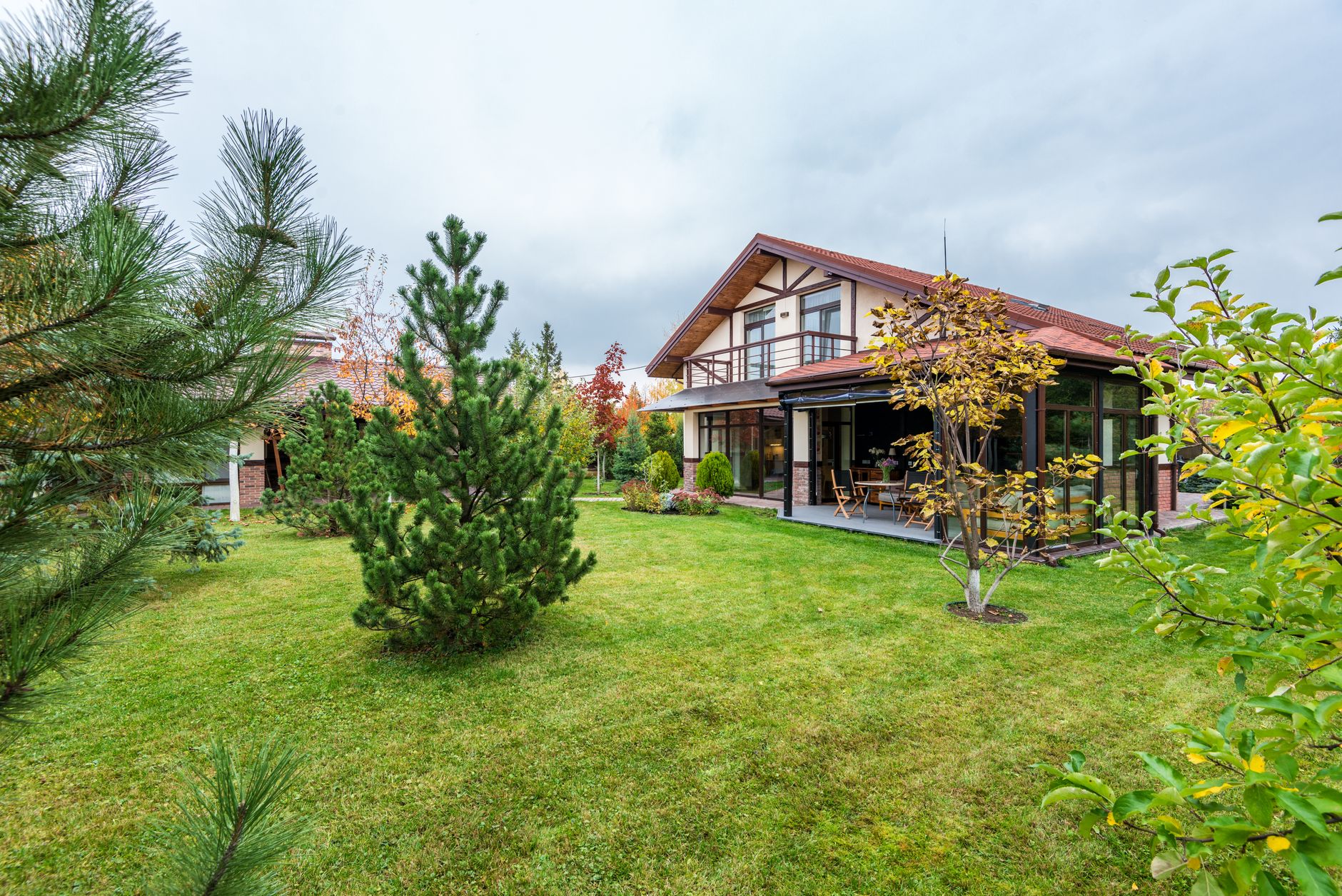
 Avenue of beeches on the Sandwijck estate near De Bilt with a white country house behind
Why people stay in De Bilt
De Bilt begins where Utrecht stops. Cycle east out of Wittevrouwen along the Biltstraat and within fifteen minutes the housing thins, the Biltse Grift canal appears on your left, and you are among the country estates that the Utrecht merchant class laid out in the eighteenth and nineteenth centuries: Sandwijck, Oostbroek, Houdringe, Beerschoten. Almost all of them are now owned by Utrechts Landschap or the municipality and open to walkers free of charge, which makes this the cheapest serious nature on the doorstep of the city. It is also where the Dutch weather comes from, officially — the KNMI sits on Utrechtseweg.
The village itself is small and unglamorous. Hessenweg is the high street: a butcher, a good bread bakery, two Turkish greengrocers, a bike shop and a handful of cafes that shut at six. There is no old market square, no canal ring, nothing that will occupy a camera for more than ten minutes. What De Bilt has instead is position — six kilometres from the Domtoren, five from the Utrecht Science Park, and immediately adjacent to the woods. If your reason for coming to the province is the landscape and the sustainability angle rather than the museums, this is a sensible and undervalued base.
Evenings are genuinely quiet. At 9pm on a Tuesday the Hessenweg is empty apart from someone walking a dog, and the nearest lively terrace is either the Zusterplein in Zeist or the Voorstraat in Utrecht. Rooms reflect that: €75 to €110 for a double in a guesthouse or a small hotel, with the higher end only appearing when a conference is running at the Science Park or at Fort Voordorp, the restored waterline fort north of the village that now trades as an events venue. Book ahead in September and October, when both fill.
Come here if you want to run or ride every morning on estate gravel, if you are visiting the university or RIVM at the Science Park, or if you want a base that lets you reach Zeist, Bilthoven and central Utrecht in twenty minutes each. Skip it if you want to walk out of a hotel door into a restaurant choice, or if you are travelling without a bike or a bus card — De Bilt strung along a main road is not much fun on foot in November rain.
Aim for the streets between Hessenweg and the Sandwijck estate — Burgemeester de Withstraat, Looydijk, the lanes off Dorpsstraat — which put you two minutes from the bakery and five from an estate gate. The village-side of the Utrechtseweg is convenient for buses but noisy; ask for a room at the back. Expect €75 to €110 for a double, €120 to €140 during Science Park conference weeks, and considerably less in January and February when nobody comes. The greener, pricier alternative is the villa strip towards Bilthoven along Soestdijkseweg-Zuid, where a room in a 1930s house costs €95 to €130 and you get pine woods instead of a through road. Avoid anything advertised as being 'near De Bilt' but actually on the A28 or the Biltse Rading — you will be on an industrial verge with a twenty-minute walk to any food at all.
Things to do in De Bilt

The gate on the Utrechtseweg just east of the village opens onto meadows, a moated country house and one of the best beech avenues in the province. It is Utrechts Landschap land, free, and there are usually more herons than people before 8am. Allow 45 minutes for the full circuit.

The national meteorological institute has stood on Utrechtseweg 297 since 1897 and its measurements define what 'the Dutch average' actually means. You cannot wander in, but the observation field and the old buildings are visible from the road, and the institute runs open days a couple of times a year.

From the Bilthovenseweg, a continuous chain of estate woodland runs north-east: Houdringe first, with its ponds, then Beerschoten with its visitor point and pancake stop. It is 4 km of gravel and leaf mould, ending within walking distance of Bilthoven station.

On the Utrecht side of the village, off the Universiteitsweg, Oostbroek grew out of a twelfth-century abbey and now holds the Utrechts Landschap offices, an orchard and a kitchen garden. The paths are open daily and it is the quietest picnic within sight of the Science Park towers.

The towpath along the old Biltse Grift canal takes you from the edge of the village to Wittevrouwen and the Utrecht city moat almost entirely away from traffic. Twenty easy minutes each way; the segment past Vollenhoven is the prettiest, and it connects to the Kromme Rijn route south.

North of the village near Groenekan stands a New Dutch Waterline fort of 1870, now used for events and open on set days and during heritage weekends. The earthworks, the bomb-proof barracks and the inundation sluices show exactly how the province planned to defend itself by drowning itself.
What to see
Hotels in De Bilt
No hotels are listed in De Bilt yet. The nearest ones are on the region page.
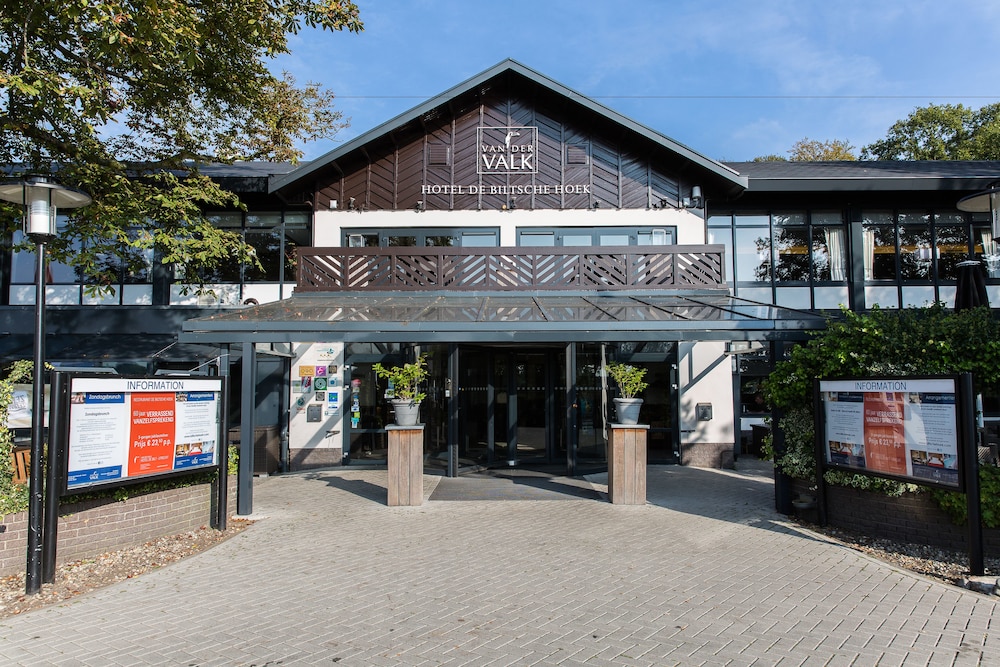
Every hotel we cover in De Bilt
Getting around De Bilt
From Schiphol it is train to Utrecht Centraal (35 minutes), then U-OV bus 77 towards Bilthoven and De Bilt, which leaves from the bus deck above the station and takes about 18 minutes to the Hessenweg. Bus 50 and 52 to Zeist also stop on the Utrechtseweg side of the village. Bilthoven railway station, ten minutes away by bike, gives you sprinter trains to Utrecht Centraal in nine minutes and Amersfoort in fourteen. By car, De Bilt sits on the A28 and A27 junction, twelve minutes from the city ring, and street parking is free almost everywhere — a genuine rarity this close to Utrecht.
Questions about De Bilt
No. It is a separate municipality, together with Bilthoven, Groenekan, Westbroek, Hollandsche Rading and Maartensdijk. The built-up areas touch along the Biltstraat, so it feels continuous, but the administration, the parking rules and the character are different. That boundary is why the estates survived: they were never city land to build on.
About ten minutes by bike along the Universiteitsweg, or fifteen minutes on bus 77 with a change, depending on which end of the campus you need. Most people who work there and stay in De Bilt cycle, because the route runs through Oostbroek and avoids traffic almost entirely.
Yes, the Utrechts Landschap estates of Sandwijck, Oostbroek, Houdringe and Beerschoten are open daily from sunrise to sunset with no ticket. Dogs must be leashed in the grazing sections. Some paths flood in a wet winter, and a few private inner gardens are fenced off, but the main circuits are always walkable.
Honestly, choose in advance. The Hessenweg has a handful of restaurants and takeaways that mostly stop serving around 9pm, and Sunday is thin. For a proper choice, cycle fifteen minutes into Wittevrouwen in Utrecht or take bus 50 to the Zusterplein terraces in Zeist, both of which run late enough to get you back.