Hotels in Utrecht · 11/11
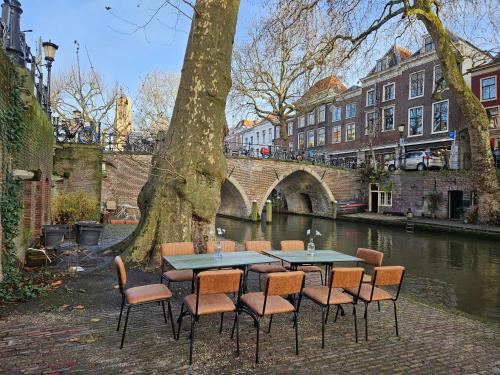
Stay in the Binnenstad if it is your first visit — the Oudegracht wharf cellars, Museum Speelklok on Steenweg and the Domtoren are all within a 10-minute walk of each other, and Utrecht Centraal is under 15 minutes on foot through Hoog Catharijne. Expect roughly €150–€230 for a 4-star double in the centre, more when the Jaarbeurs has a fair on. The Museumkwartier, the quiet southern end of the Binnenstad along the Nieuwegracht, puts you between Centraal Museum, Museum Catharijneconvent and Sonnenborgh for similar money but with far less late-night noise. Wittevrouwen and Vogelenbuurt, just north-east past the Griftpark, run about €100–€150 in small hotels and B&Bs and are a 15-minute walk from the Dom. Lombok, immediately west of the station, is the cheapest genuinely central option at around €90–€130, with the Turkish and Moroccan food shops of the Kanaalstraat on the doorstep.
Find your hotel

Where to stay in Utrecht: which area suits which traveller
Stay in the Binnenstad if it is your first visit — the Oudegracht wharf cellars, Museum Speelklok on Steenweg and the Domtoren are all within a 10-minute walk of each other, and Utrecht Centraal is under 15 minutes on foot through Hoog Catharijne. Expect roughly €150–€230 for a 4-star double in the centre, more when the Jaarbeurs has a fair on. The Museumkwartier, the quiet southern end of the Binnenstad along the Nieuwegracht, puts you between Centraal Museum, Museum Catharijneconvent and Sonnenborgh for similar money but with far less late-night noise. Wittevrouwen and Vogelenbuurt, just north-east past the Griftpark, run about €100–€150 in small hotels and B&Bs and are a 15-minute walk from the Dom. Lombok, immediately west of the station, is the cheapest genuinely central option at around €90–€130, with the Turkish and Moroccan food shops of the Kanaalstraat on the doorstep.
Further out, prices drop and you trade walking for a train or tram. Kanaleneiland, Nieuwegein, Houten and Vianen sit at roughly €75–€115 for a chain double with parking, and all are 8–15 minutes from Utrecht Centraal by tram 60/61 or Sprinter. Leidsche Rijn and Papendorp suit drivers arriving on the A2 at about €90–€140; Rijnsweerd and Utrecht Science Park (De Uithof) are business and hospital territory and go cheap in July and August. If you came for the greener half of the province, base yourself in Zeist, De Bilt or Bilthoven near the Utrechtse Heuvelrug (€110–€180 in country hotels), or in Amersfoort, 15–20 minutes by train, where a room by the Koppelpoort costs €100–€160 and puts the Mondriaanhuis and Museum Flehite on your street. Overvecht and Zuilen are the budget end at €70–€100, with Slot Zuylen and a 5-minute train ride into town as compensation.
Best time to visit Utrecht, month by month
January and February are the cheapest months for leisure rooms — 3-star doubles at weekends from about €70 — but midweek is a trap, because the Jaarbeurs next to Utrecht Centraal runs the Vakantiebeurs in mid-January and the Huishoudbeurs in late February, and city hotels sell out on the Tuesday to Thursday. March and April bring the Keukenhof coach traffic and Koningsdag on 27 April, when the Oudegracht fills with boats and rates jump 40–60% for the night of the 26th. May is strong: Bevrijdingsdag on 5 May with the festival in Park Transwijk, plus Ascension and Whitsun long weekends. June is the best month for the wharf terraces and the Midzomergracht festival, with 4-star rooms around €160–€200.
July and August are counter-intuitive here. Utrecht is a working city rather than a resort, so when the university and the offices empty, hotels in Rijnsweerd, Papendorp, De Uithof and Nieuwegein hit their annual low, often €80–€110 for something that costs €160 in October. The exception is the last week of August, when the UIT introduction week brings students and parents to Utrecht Science Park. September is the priciest stretch — the Nederlands Film Festival takes over the city at the end of the month — and mid-October adds spillover from Amsterdam Dance Event, 26 minutes up the line. Le Guess Who? in the second week of November fills the centre again; the week between Christmas and New Year is the quietest and cheapest of the second half of the year.
Getting around Utrecht: trains, trams and whether you need a car
You do not need a car. Utrecht Centraal is the busiest railway hub in the Netherlands, with direct trains to Amsterdam Centraal in 26 minutes (about €9.30), Schiphol in around 32 minutes (about €11.50), Amersfoort in 15–20 minutes and Rotterdam in 40. Locally, tram 22 runs from the station to Utrecht Science Park in about 16 minutes, tram 60 to Nieuwegein and tram 61 to IJsselstein, and U-OV buses cover Zeist, De Bilt and Bunnik. Pay contactless at the gate or on the bus; a single bus ride within the city is roughly €2.50–€3.50 depending on distance. Sprinters reach Overvecht in 5 minutes, Houten in 9 and Driebergen-Zeist in 12.
Driving into the Binnenstad is the part people get wrong. On-street parking in the centre runs €5–€7.50 an hour, a low-emission zone applies to older diesels, and the ring at Oudenrijn and Lunetten where the A2, A12 and A27 meet is one of the country’s worst bottlenecks at 08:00 and 17:00. Use the P+R sites at Westraven, Papendorp or Utrecht Science Park, which cost around €5 for the day including return public transport for the car’s occupants. A car does earn its keep for Kasteel de Haar at Haarzuilens, Huis Doorn, Wijk bij Duurstede and the Loosdrechtse Plassen. Note that Zeist and Doorn have no railway station of their own — Driebergen-Zeist is about 4 km from Zeist centre, with bus 50 and 52 covering the gap.
How many nights in Utrecht, and what to do with them
Two nights covers the city, three lets you add the province, and four is right if museums are the point of the trip. Day one: the Binnenstad on foot — the guided climb up the 112-metre Domtoren (465 steps, around €17.50), Museum Speelklok, then the Oudegracht wharves at the Winkel van Sinkel end. Day two is the Museumkwartier: Centraal Museum on Agnietenstraat, Museum Catharijneconvent on the Lange Nieuwstraat, and a timed slot at the Rietveld Schröderhuis on Prins Hendriklaan, a UNESCO site since 2000 where tickets are sold through Centraal Museum and sell out days ahead. Families should swap one of those for the Spoorwegmuseum at the old Maliebaanstation and the nijntje museum opposite Centraal Museum.
With a third night, go outward. Amersfoort is 15–20 minutes by train for the Koppelpoort, the Mondriaanhuis and the 98-metre Onze Lieve Vrouwetoren; alternatively take bus 50 towards Doorn for Huis Doorn and a walk on the Amerongse Berg, at 69 metres the high point of Nationaal Park Utrechtse Heuvelrug. A fourth night suits the water and the castles: the Vecht country houses at Maarssen, the Loosdrechtse Plassen via Breukelen, or Kasteel de Haar at Haarzuilens (entry around €19). A Museumkaart at roughly €75 pays for itself in about four museums, which is easy to reach in three days here.
What hotels in Utrecht actually cost
Budget in Utrecht means €70–€110 a night. That buys a hostel private room or a small 2-star near Lombok and the Kanaalstraat, or a chain double with free parking in Kanaleneiland, Nieuwegein, Houten or Vianen — clean, functional, 10 minutes from Utrecht Centraal by tram or Sprinter, breakfast usually €12–€18 extra. Mid-range is €120–€180: a 3- or 4-star in the Binnenstad or Museumkwartier, or a 4-star garden hotel in Zeist or Bilthoven near the Heuvelrug. Top-end in Utrecht runs €200–€350 for canal-house rooms and the handful of properties in historic buildings around the Nieuwegracht and Janskerkhof; there is no five-star resort tier here, so €350 is close to the practical ceiling outside fair weeks.
Rates spike on a schedule you can plan around. Jaarbeurs trade fairs push centre and Kanaleneiland midweek prices up by €50–€100 a night; Koningsdag on 26–27 April, the Nederlands Film Festival in late September and Le Guess Who? in November do the same at weekends; and when Amsterdam sells out in mid-October, Utrecht absorbs the overflow because it is 26 minutes away. Utrecht city adds tourist tax as a percentage of the room rate — currently around 7% — and it is often charged at checkout rather than included in the quoted €. Amersfoort, Zeist and the smaller municipalities set their own, usually a fixed amount per person per night. Free parking is normal in Leidsche Rijn, Houten and Nieuwegein and rare in the Binnenstad, where hotel garages charge €20–€30 for 24 hours.
The Utrecht booking traps nobody warns you about
The first is the Jaarbeurs calendar. The exhibition halls sit directly across the tracks from Utrecht Centraal, so a large fair or congress empties the city’s rooms on a Tuesday in February as thoroughly as a festival would on a Saturday in September. Check the Jaarbeurs dates before you fix your nights — shifting a midweek stay by two days can save €60–€80 a night, and if it cannot be moved, Amersfoort, Woerden or Houten stay reasonable and are 9–20 minutes out by train. The second is Amsterdam: plenty of people book Utrecht as a cheaper base, which works well, but it means Utrecht prices follow Amsterdam’s peaks, including Amsterdam Dance Event in October and the King’s Day weekend.
The area people wrongly skip is Overvecht, and to a lesser extent Zuilen. Neither is scenic, but Utrecht Overvecht station is 5 minutes from Centraal, rooms sit €40–€60 below the Binnenstad, and Slot Zuylen and the Vecht towpath towards Maarssen are on the doorstep. The other thing worth knowing is the bike: OV-fiets hire at Utrecht Centraal costs about €4.55 per 24 hours but needs a personal Dutch OV-chipkaart with a subscription, which visitors cannot get on the day, so budget €10–€15 a day at a private rental shop instead. Park it in the Stationsplein garage under the square, the largest bicycle park in the world at some 12,500 spaces, where the first 24 hours are free.