Loosdrechtse Plassen
Twenty-five square kilometres of water left behind by four centuries of peat digging: the sailing capital of the central Netherlands, with reed islands, Natura 2000 marsh, swimming beaches and a fleet of rental sloops half an hour north of Utrecht.
 Sailing boats on the open water of the Loosdrechtse Plassen north of Utrecht
What to expect at Loosdrechtse Plassen
The Loosdrechtse Plassen are not natural lakes but the industrial scar of the Dutch Golden Age. From the sixteenth century onwards, peat was cut from the wet land north of Utrecht, dried on narrow strips called legakkers and burned as fuel for the growing cities; storms and wave action then ate the strips away until the diggings merged into one vast sheet of shallow water. What remains is roughly 2,500 hectares of lake, threaded with surviving reed banks and islands, part of the wider Vechtplassen wetland that is protected as a Natura 2000 area for its marsh birds, otters and rare plant communities. Today it is also the sailing heart of the region, ringed by marinas and boatyards along the Oud-Loosdrechtsedijk. For Utrecht, it is the nearest true open water and the easiest place to see how landscape here was made by extraction.
A visit divides between water and edge. On the water, you can rent an electric sloop, a small open sailing boat or a canoe from the harbours at Oud-Loosdrecht and drift among the reed islands, past thatched boathouses and the moored classic yachts that give the lakes their look. Sailing schools operate here through the season, and windsurfers and kitesurfers use the more open stretches when the wind is up. On land, dykes and shoreline paths run along the Oud-Loosdrechtsedijk with views across the water, small swimming beaches and grassy access points appear at intervals, and inland at Nieuw-Loosdrecht stands Kasteel-Museum Sypesteyn, a curious early twentieth-century reconstruction of a family castle. Birdwatchers work the quieter margins towards the Vuntus and Breukeleveen for grebes, terns and marsh harriers.
Plan around wind and season. Between April and October you can hire a boat by the hour or half day and this is the reason most people come; outside those months the harbours largely shut and the appeal narrows to walking and birdwatching. Electric sloops need no licence and are the family default; small sailing dinghies require competence or a lesson. Book on hot weekends, when rental fleets are gone by 10:00. Bring sun protection, because there is no shade on open water, and a windproof layer, because the lakes are exposed and cool fast in the afternoon. Swimmers should check the provincial water-quality notices, since blue-green algae warnings do occur in hot, still summers.
Getting there takes planning without a car. From Utrecht Centraal, trains reach Hilversum in about 17 minutes for roughly €5, and regional buses run from Hilversum station southwest to Loosdrecht in a further 20-25 minutes, putting you near the dyke and the harbours. Cyclists have the nicer option: the route north from Utrecht through Maarssen and along the Vecht past Breukelen is one of the best day rides in the province, around 25 kilometres each way on flat, sheltered paths, with a rental at €10-15 a day. Drivers take the A2 north and turn off at Breukelen or Loenersloot; parking along the Oud-Loosdrechtsedijk is a mix of free verges and paid harbour or beach car parks charging a few euro.
Reaching the water costs nothing: the dykes, shoreline paths and most small beaches are free public access, and there is no ticket for the Natura 2000 area. Costs start with boats. Electric sloops for four to six people typically run in the region of €60-90 for a half day and €100-150 for a full day, depending on size and season; canoes and kayaks are more like €10-20 an hour; small sailing boats and windsurf gear vary widely with sailing school packages. Beach car parks charge a few euro on summer days. Waterside cafes and pancake houses along the dyke charge about €3 for coffee and €12-20 for a main. Kasteel Sypesteyn charges its own modest museum admission.
Timing shapes the whole day. June to early September is the season, and within it the calm window is before 10:00, when the water is glassy, the light is best and rental desks are unhurried; by early afternoon on a hot Saturday the harbours are chaotic and the beaches full. Wind builds through the afternoon, which suits sailors and ruins picnics. May and September are the sweet spots: warm enough, half the crowds, and migrating birds on the margins. Winter is stripped back but genuinely beautiful in frost, and in rare hard freezes the lakes become a skating venue with a serious local following. November rain here is as grim as the Netherlands gets.
It suits families with an electric sloop, sailors of every level, cyclists making a day of the Vecht, and birdwatchers with binoculars and patience. Accessibility is mixed: dyke paths and harbour quays are mostly firm and level, and some rental operators can help with boarding a sloop, but the small beaches are sand and grass and the reed-edge paths are rough. It is a poor choice in bad weather, when there is nothing to do and nowhere to shelter beyond a cafe, and a poor choice for anyone without half a day, since the journey from Utrecht eats an hour each way. Non-swimmers should note that most beaches are unsupervised.
Nearby, the Vecht valley is the natural pairing: Breukelen, Loenen and Maarssen line the river with country houses and tea pavilions built by Amsterdam merchants, and the cycle route back to Utrecht passes most of them. Kasteel-Museum Sypesteyn is minutes inland at Nieuw-Loosdrecht. The Maarsseveense Plassen, much closer to Utrecht, offer a simpler swimming day with a recreation area and beach if you only want water. Hilversum, 25 minutes away, holds the Sonneveld-era modernism of Dudok, including the celebrated town hall, which makes an excellent wet-weather substitute if the lake day collapses.
The caveats are real. This is a recreation landscape more than a wild one: motorboats, jetties, holiday homes and marinas dominate the southern shore, and anyone arriving expecting untouched marsh will find that lies further north in the quieter Vuntus and Breukeleveense reserves. Public transport is slow and the last buses back to Hilversum are earlier than city visitors expect. Rental prices climb in July and August and the best boats go days ahead. Blue-green algae warnings close swimming spots in some summers. And the lakes are shallow and can be choppy — inexperienced sailors underestimate how quickly an afternoon wind turns a pleasant sail into work.
Questions about Loosdrechtse Plassen
Reaching and walking the lakes is free: dykes, shoreline paths and most small beaches have no entry charge. Boats are the expense. Electric sloops seating four to six run roughly €60-90 for a half day and €100-150 for a full day in season, canoes and kayaks about €10-20 an hour, and sailing lessons are priced by package. Beach and harbour car parks charge a few euro on summer days, and lakeside cafe mains run €12-20.
Public access to the water's edge is free permanently, with no ticketed windows, because the shoreline paths and Natura 2000 reserve are open landscape. What changes is season: rental harbours generally operate April to October, roughly 9:00-18:00, and are shut or skeleton-staffed in winter. Some beach car parks only charge in the summer months. Nature reserve sections restrict access in the bird breeding season, particularly the quieter reed areas to the north.
Half a day minimum, a full day if you take a boat. Travel from Utrecht is about an hour each way by train and bus, so a two-hour visit is not worth it. A typical outing is a three-hour sloop hire plus lunch on the dyke, which fills five to six hours door to door. Cyclists riding out along the Vecht should plan a full day, around 50 kilometres of flat riding with stops.
The lakes and shoreline never close. Boat rental businesses shut for the winter, typically from late October to late March, and reduce hours in shoulder season. Swimming areas can be closed temporarily by the province when blue-green algae blooms in hot, still weather, with warnings posted at access points. Reed-edge nature areas restrict entry during spring nesting. High winds occasionally see rental operators cancel small-boat hire for safety.
Book boats. On summer weekends the electric sloop fleets at Oud-Loosdrecht are fully reserved days in advance, and turning up at 11:00 in July means no boat. Canoes are easier but still run out on hot afternoons. Sailing lessons must be arranged ahead through the local schools. Nothing else needs reserving: the shoreline, dykes and beaches are open access, and Kasteel Sypesteyn generally admits visitors on arrival during its opening season.
Take the train from Utrecht Centraal to Hilversum, about 17 minutes for roughly €5, then a regional bus southwest towards Loosdrecht for a further 20-25 minutes to stops along the dyke. Check the last return bus, which is earlier than city visitors expect. By bike it is around 25 kilometres from Utrecht via Maarssen and the Vecht at Breukelen. Drivers use the A2, exiting at Breukelen or Loenersloot for the Oud-Loosdrechtsedijk.
Hotels near Loosdrechtse Plassen

Every hotel we cover in Maarssen
- De Lindenhof 4★ · 4 km away
- Loft met veel zonlicht 3★ · 4.8 km away
- Logement aan de Vecht 1★ · 4.4/5 · 5 km away
- The Riverside Logies & Restaurant 3★ · 5.1 km away
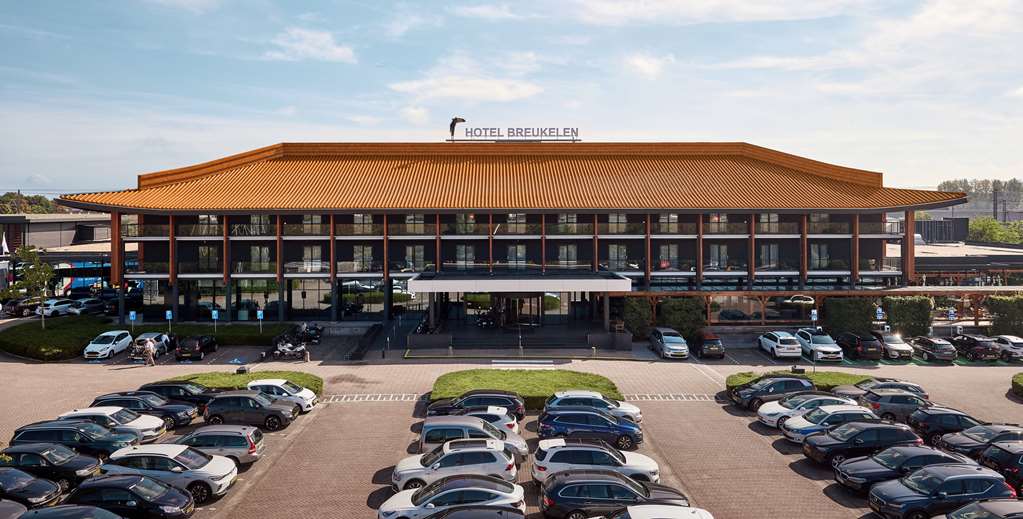
- Van der Valk Hotel Breukelen 3★ · 4.2/5 · 5.5 km away
- Cozy 2 bedroom apartment 3★ · 6.1 km away
- Historical house on river Vecht 4★ · 6.3 km away
- Harry’s Home Tiel Bed & Breakfast 3★ · 6.8 km away
- BoHo Experience Wellness Jacuzzi Sauna BBQ Garden Sleeps 10 4★ · 7.7 km away
- Bohemian Experience Wellness Jacuzzi Sauna BBQ Garden Sleeps 14 4★ · 7.7 km away
- Farmhouse Jacuzzi Sauna BBQ grill & Garden Sleeps 24 4★ · 7.7 km away
- @TheLodge 3★ · 8.5 km away
- Carlton President 4★ · 4.3/5 · 8.5 km away
- Boerderij Hazenveld 3★ · 4.7/5 · 9.6 km away
- De Buren 4.2/5 · 11 km away
More things to do
All things to do

From the journal
All posts Comparisons & rankings
Hotels with free parking in Utrecht, ranked
Comparisons & rankings
Hotels with free parking in Utrecht, ranked
On-street parking inside Utrecht's canal ring can pass €5 an hour and a central hotel space costs €20-30 a night, so here are 8 kinds of hotel that throw the car in for nothing — and the ride into town each one leaves you with.
 Comparisons & rankings
Best family-friendly hotels in Utrecht, ranked
Comparisons & rankings
Best family-friendly hotels in Utrecht, ranked
Utrecht's prettiest hotels are 17th-century canal houses with 40 steps and no lift, so here are 8 places-and-types that actually work with children — plus the €0-€25 attractions that justify each location.
 Comparisons & rankings
Pet-friendly hotels in Utrecht, ranked
Comparisons & rankings
Pet-friendly hotels in Utrecht, ranked
Most Utrecht hotels take dogs for €10-20 a night, but only a few give you somewhere to walk one at 07:00 — here are 7 areas and hotel types ranked on exactly that, plus the off-leash woods worth the ride.