Doorn
Woodland village on the Utrechtse Heuvelrug with an exiled Kaiser's house museum, estate hotels and marked forest loops in every direction.
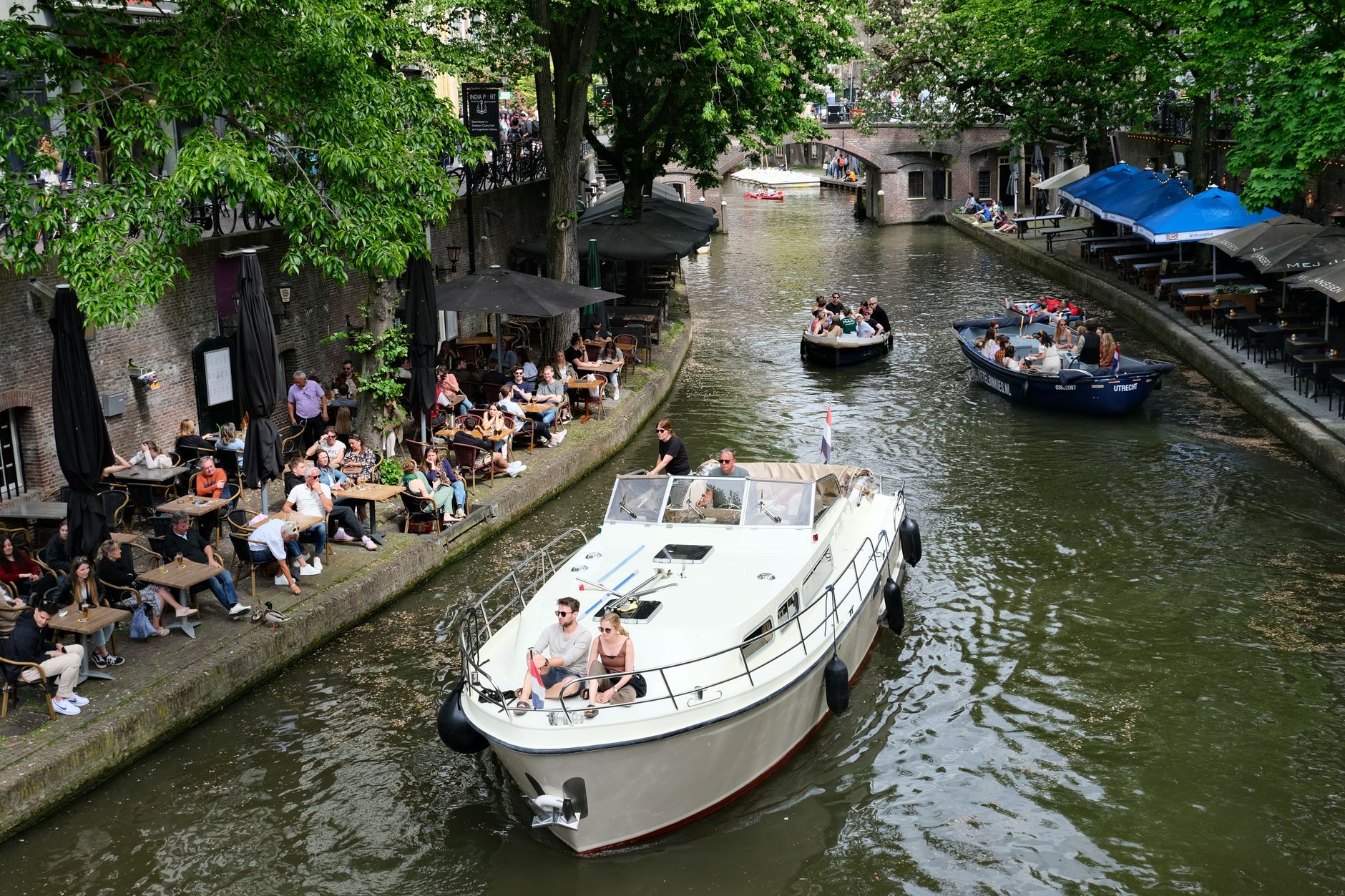
 Beech avenue and estate gatehouse on the sandy ridge at Doorn
Why people stay in Doorn
Doorn is a village of roughly ten thousand people on the sand ridge of the Utrechtse Heuvelrug, twenty kilometres east of Utrecht, and it is emphatically its own place rather than a suburb of anywhere. The entire commercial life of the village fits into three hundred metres of Dorpsstraat: two bakeries, a cheese shop, a supermarket, a bookshop and five or six terraces. Almost all of it closes at six, and Sunday morning is genuinely shut. What you actually come for begins where the pavement ends — beech, oak and Scots pine in every direction, and one of the odder house museums in the country.
That museum is Huis Doorn, where Kaiser Wilhelm II lived out his exile from 1920 until he died in 1941. The rooms were left as he had them, down to the snuffboxes, and the effect is less grand than melancholy: a deposed emperor rebuilding a Potsdam interior inside a modest Dutch country house. Admission runs around €14 and ninety minutes is enough. The house museum keeps a season, broadly mid-March to the end of October and closed Mondays, while the park and the mausoleum stay accessible longer. Turn up on a February Monday and you will be walking the woods instead.
The woods are the real argument for staying here. The Kaapse Bossen begin a kilometre north of the village and run for hundreds of hectares, with a lookout tower on the highest dune, a proper marked mountain-bike route and sandy trails that drain fast after rain. Parking at the Natuurmonumenten entrance on the Woestduinlaan side is paid — a few euro, free for members. Ten minutes east, the Von Gimborn Arboretum holds one of Europe's better conifer and rhododendron collections for about €6, and it is nearly empty on a weekday in May.
By nine at night Doorn has three or four lit windows on the Dorpsstraat and that is it. Kitchens stop taking orders around half past eight, the last bus back toward Utrecht leaves in the mid-evening, and a taxi from Driebergen-Zeist station costs roughly €25. This suits walkers, cyclists, people travelling with dogs, and anyone who wants forest air and a real bed rather than a city view. It is a poor choice if you want museums after dark, a bar crawl, or the reassurance of a train two minutes away — stay in Zeist or the Binnenstad instead.
The good beds sit on the two estate roads: the Amersfoortseweg north of the centre and the Langbroekerweg running south-east toward the castle lanes, both lined with walled parkland and gravel drives. Expect €95 to €150 for a double in a country-estate hotel with breakfast, and €70 to €95 in the village bed-and-breakfasts around the Kerkplein and Berkenweg. Two things to check before booking. First, whether the property is running a corporate conference that week — several of the estate hotels are conference houses first and the dining room fills at 18:30 with lanyards. Second, ask for a room away from the N225, the Utrecht-Arnhem road that becomes the Dorpsstraat: it is quiet after ten but carries steady traffic from seven in the morning. Avoid the motels clustered by the A12 exits at Maarn — cheaper, but you lose the whole point of being here.
Things to do in Doorn

Langbroekerweg 10, five minutes' walk south-east of the Dorpsstraat. The interiors are as Wilhelm II left them in 1941; the ticket is about €14 and includes the walled garden, the Orange Hall exhibition and the domed mausoleum where he is buried. Allow ninety minutes, and check the season before travelling.

Enter from the Woestduinlaan or the car park off the Arnhemse Bovenweg, a kilometre north of Doorn centre. A wooden tower on the highest dune gives a flat green horizon broken by the Amerongen church spire. The marked mountain-bike loop and the wheelchair-accessible forest path both start from the same clearing.

Velperengh 13, on the eastern edge of the village toward Leersum. A University of Utrecht collection of some 8,000 woody plants across 27 hectares, strongest in conifers, rhododendrons and maples. Entry is around €6, cash-free, and it is at its best in late May and again in mid-October.

Off the Gooijerdijk between Doorn and Langbroek, a former sand quarry with clear water, a shelving beach and no facilities worth the name. Free, unsupervised, and busy on the two hot weekends the Netherlands gets each summer. Bring your own everything; the nearest coffee is back on the Dorpsstraat.
Head south-east from Doorn on the Langbroekerdijk toward Langbroek and Cothen. Within eight kilometres you pass Kasteel Sterkenburg, Walenburg, Lunenburg and Sandenburg, a ribbon of medieval tower houses on a drainage ditch dug in the twelfth century. Most are private; the gardens at Walenburg open on limited days in summer.

Six kilometres west via the Woudenbergseweg, an earth pyramid heaped up by Napoleonic troops in 1804 and topped with an obelisk. Around €4 to climb it, with a café at the base. Combine it with the sand drifts of the Leusderheide and the Wageningse Berg cycle route back to Doorn.
What to see
Hotels near Doorn
No hotels are listed in Doorn yet. The nearest ones are on the region page.
Every hotel we cover in Doorn
- Parc Broekhuizen 4★ · 4.6/5
- Buitenplaats de Bergse Bossen 4★ · 4.3/5
- Landgoed de Horst 3★ · 4.3/5
- Vakantiepark Bonte Vlucht 3★ · 4.2/5
- Landgoed Zonheuvel 4★ · 4.1/5
- Amrâth Hotel Maarsbergen 4★ · 3.3/5
- B&B La 'Petite Bergerie' 4★
- Berghut 4★
- Private Garden House in Doorn 4★
- B&B en Boshuis Darthuizerpoort 3★
- Bed & Breakfast de Oude Kapel 3★
- Kasteel Sterkenburg 3★
- Klein Dubbelland 3★
- KNUS tiny gardenhouse 3★
- Peaceful Farmhouse in Doorn near Forest 3★
- RCN Vakantiepark Het Grote Bos Camping en bungalowpark 1★
- Landelijke gelegen Lodge
Getting around Doorn
From Schiphol take the train to Utrecht Centraal, about 35 minutes, then bus 50 from the bus deck above the station toward Wageningen: it runs along the N225 through Zeist and Driebergen and reaches Doorn Dorpsstraat in roughly 35 to 40 minutes, two to four times an hour by day. Tap in and out with an OV-chipkaart or contactless bank card; the fare from Utrecht is a few euro. The alternative is a train to Driebergen-Zeist, ten minutes from Utrecht, then the same bus 50 for fifteen minutes. By car it is exit 22 off the A12, then the N227. Inside Doorn everything is walkable, and village parking is free.
Questions about Doorn
Yes, if you are happy on a bus and a bike. Bus 50 from Utrecht Centraal stops in the middle of the village and runs until mid-evening, and both the Kaapse Bossen and Huis Doorn are within twenty minutes on foot. For the arboretum, the Doornse Gat or the castle lane you want a bicycle — most hotels lend or rent them for around €12 a day. After about 22:00 you are reliant on a taxi.
No, and this catches people out. The house museum works to a season that broadly runs from mid-March to the end of October, closed on Mondays, with occasional winter openings around Christmas. The park, the tea pavilion and the mausoleum are accessible on more days than the house itself. Check the current calendar before you build a day around it, because Doorn has no wet-weather backup.
The Doornse Gat off the Gooijerdijk is the local answer: a spring-fed former sand quarry with genuinely clear water, free and unsupervised, about three kilometres from the village. There are no changing rooms, no lifeguard and no kiosk. For a supervised beach with a café you would drive twenty-five minutes north-west to the Henschotermeer near Woudenberg, which charges for parking in summer.
Twenty kilometres, which is 35 to 40 minutes on bus 50 or about 30 minutes by car outside rush hour. By bicycle it is a pleasant 90 minutes on the Kromme Rijn route via Bunnik and Amelisweerd, almost entirely off-road. Coming back after an evening in the Binnenstad is the weak point: plan on the last bus or a €40 taxi.