Zuilen
Old factory village on the Vecht: a genuine castle, a fort with a terrace, converted workshops and a car-light new district taking shape.
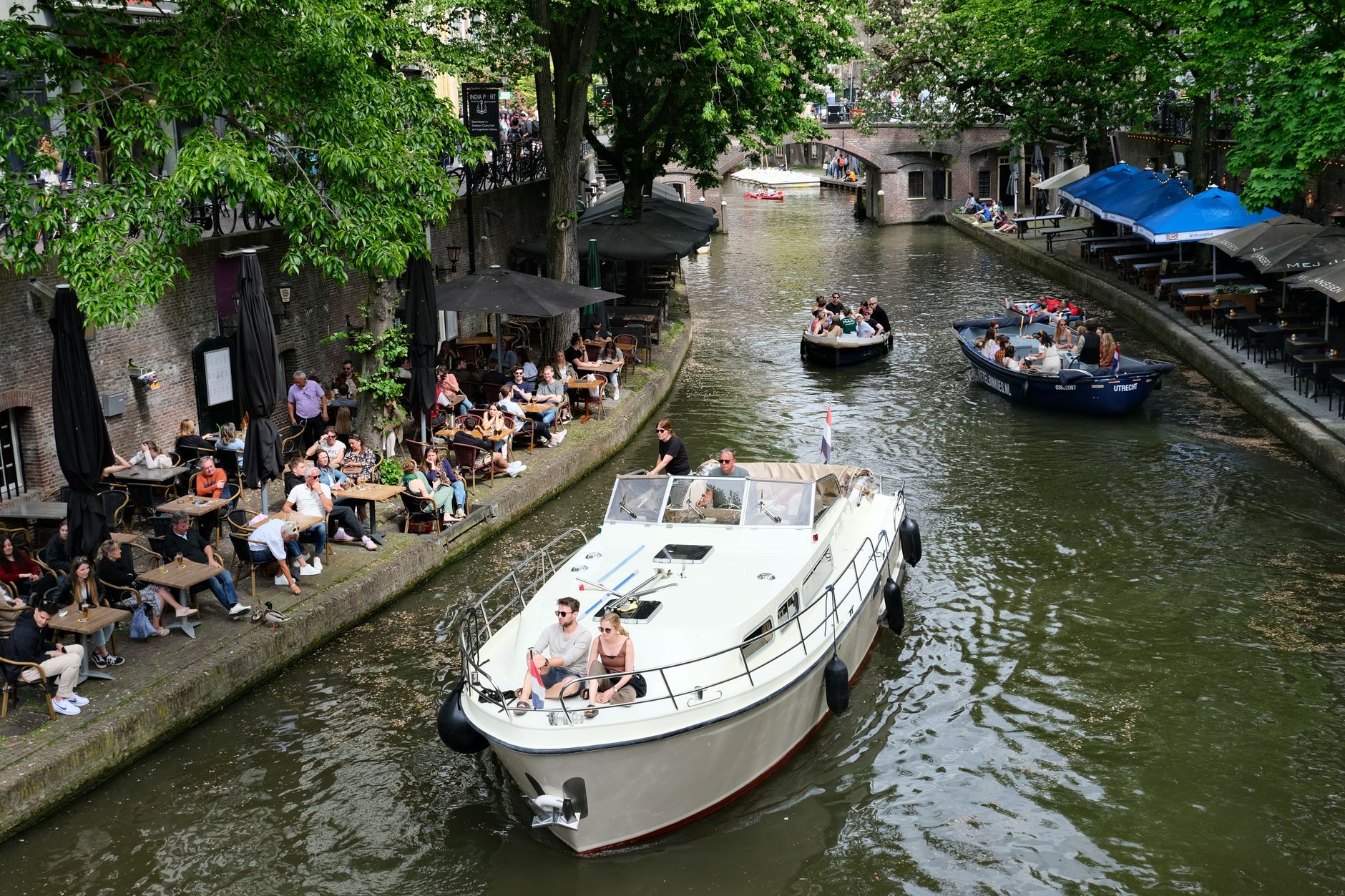
 The river Vecht with moored boats beside old workers housing and a converted factory hall in Zuilen, Utrecht
Why people stay in Zuilen
Zuilen was an independent municipality until 1954, a company village grown around the Werkspoor railway works and the Demka steel plant, and it still feels different from the rest of Utrecht: sturdy 1920s workers' housing, a long ordinary shopping street in the Amsterdamsestraatweg, and the river Vecht curling along its northern edge with houseboats and rowing crews. It is one of the cheapest places to sleep within four kilometres of the Oudegracht and one of the few with a castle, a fort and a rose garden inside walking distance.
The industrial bones are being reused rather than erased. The Werkspoorkathedraal, a vast former locomotive hall on the Tractieweg, now takes markets, festivals and design fairs, and the workshops around it house makers, breweries and studios. Next to it, the Cartesiusdriehoek is being rebuilt as a deliberately low-car district on the healthy-urban-living model, with shared cars, few private parking spaces and a lot of planting, right next to the railway. If you care about how Dutch cities are actually converting their industrial land, walk this triangle.
At nine in the evening, Zuilen splits in two. The Amsterdamsestraatweg is lit, busy and frankly scruffy — kebab shops, phone repair, cafés with the football on, a fair amount of traffic — and it has a reputation for petty crime that is not entirely undeserved. Two streets north, the Julianapark and the Vecht are calm, dark and lovely, with the water reflecting the boat lights. The northern edge, Oud-Zuilen, is a preserved village of white-shuttered houses that you would not believe sits inside a city.
Stay here if you want €65 to €100 for a double, a five-minute train to Utrecht Centraal, and a bicycle route straight up the Vecht towards Maarssen, Loenen and the Loosdrechtse Plassen — genuinely one of the great flat rides in the Netherlands. Skip it if the sight of a tired 1950s shopping street will spoil your week, or if you need a fine-dining scene on your doorstep. Dinner here means Turkish grills, a Surinamese counter or a cycle into the centre, and everything except the takeaways stops around 22:00.
The best streets are the ones between the Amsterdamsestraatweg and the Vecht, especially near the Julianapark and towards Fort aan de Klop, and the quiet blocks around Utrecht Zuilen station — five minutes on the sprinter to Centraal is the district's best asset. Oud-Zuilen, the old village by Slot Zuylen, has a handful of B&B rooms at €100 to €140 and is by far the prettiest place to wake up. Expect €65 to €100 for an ordinary double, up to €120 in July. Avoid rooms fronting directly onto the Amsterdamsestraatweg, which is noisy until late and unglamorous at any hour, and avoid the industrial fringe along the Zuilense Ring. Street parking is mostly free once you are north of the paid zone, but confirm with your host.
Things to do in Zuilen

At Tournooiveld in Oud-Zuilen, Slot Zuylen is a genuine moated castle with interiors, a serpentine wall in the kitchen garden and the story of Belle van Zuylen, the 18th-century writer who grew up here. Guided tours run about €12, closed Mondays outside high summer, and the tea room in the garden is worth an hour.

Where the Klopvaart meets the Vecht, Fort aan de Klop is a small fortification turned hostel, campsite and café, with a terrace on the water. A beer runs about €3.50, pancakes and soup are the food, and the sun sits on it all evening. Ten minutes by bike from the middle of Zuilen.

On the Tractieweg, the Werkspoorkathedraal is a vast former locomotive hall now used for markets, design fairs and festivals, surrounded by maker workshops and a brewery or two. Beside it, the Cartesiusdriehoek is being built as a low-car district. Check what is programmed in the hall before you go; between events it is closed.

The Julianapark, off the Amsterdamsestraatweg, is Zuilen's set-piece green space: a formal rose garden, a bandstand, a pond and mature trees, all free and open through the day. It is the single best reason to walk two blocks off the shopping street, and it is at its best in June and again in September.

From Fort aan de Klop the towpath runs north along the Vecht past country houses, boatyards and Maarssen's canal-side village, and continues towards Loenen and the Loosdrechtse Plassen. Utrecht to Maarssen is about 8 km of flat, protected riding, and you can put the bike on a sprinter back from Maarssen station.

The Daphne Schippersbrug is a bicycle and pedestrian bridge that leaps the Amsterdam-Rijnkanaal from Zuilen to the new west, passing over a school roof on its ramp. Ride it once for the engineering alone, then continue into Máximapark: about 20 minutes from Zuilen station to the Vlinderhof gardens.
What to see
Hotels near Zuilen
No hotels are listed in Zuilen yet. The nearest ones are on the region page.
Every hotel we cover in Zuilen
Getting around Zuilen
From Schiphol take a direct intercity to Utrecht Centraal, 35 minutes and about €11.20, then a sprinter towards Amsterdam or Breukelen one stop to Utrecht Zuilen, 5 minutes, roughly €2.30, four an hour until late. City buses run the length of the Amsterdamsestraatweg into the centre in 12 to 15 minutes. Cycling to the Oudegracht is 3.5 km and about 13 minutes, either down the Amsterdamsestraatweg or along the greener Vecht and Vredenburg route; northbound the towpath runs to Maarssen in half an hour. Drivers reach the A2 in five minutes via the Zuilense Ring, and most of Zuilen still has free street parking.
Questions about Zuilen
Broadly yes, with one caveat: the Amsterdamsestraatweg has a long-standing reputation for petty crime, drunkenness late at night and bicycle theft, and it looks the part. The residential streets north of it, around the Julianapark and the Vecht, are ordinary and quiet. Lock your bike to a fixed object with two locks and take a slightly longer route home along the park rather than the main street.
About 3.5 km. That is 5 minutes by sprinter from Utrecht Zuilen station to Centraal, 12 to 15 minutes by bus down the Amsterdamsestraatweg, or 13 minutes on a bike. Walking takes around 40 minutes. Trains run four times an hour with the last departures near midnight, so an evening in the Binnenstad is easy to get home from.
Yes. It is about 2 km north of Utrecht Zuilen station in the village of Oud-Zuilen, a 10-minute bike ride or 25-minute walk mostly along the Vecht towpath, and a local bus also passes nearby. Interior visits are guided, cost around €12, and the castle closes on Mondays outside the summer season, so check before setting out.
It is one of the best in the city. The Vecht towpath starts on your doorstep at Fort aan de Klop and runs flat and traffic-free towards Maarssen, Breukelen, Loenen and the Loosdrechtse Plassen, and the Daphne Schippersbrug takes you west into Máximapark in 20 minutes. Rent an OV-fiets at Zuilen or Centraal station for about €4.55 a day.